Driving Through Time: Luxor’s Festival Soul Uncovered
You know that feeling when you hit the open road with no rush, just you and the rhythm of the engine? I drove through Luxor, Egypt, during festival season, and it was mind-blowing. Temples lit up at night, music floating through ancient alleys, locals dancing in celebration—it felt like stepping into a living story. Self-driving gave me the freedom to chase the heartbeat of this culture, one spontaneous stop at a time. The hum of the engine blended with distant drumbeats, and every turn revealed another layer of history meeting celebration. This is not just a journey across geography, but through time—where the past pulses in the present, and the open road becomes a portal to authenticity. In Luxor, driving isn’t just transportation. It’s transformation.
Why Luxor? Why Drive?
Luxor stands as one of the most culturally rich cities on Earth, built upon the ruins of ancient Thebes, once the capital of Egypt’s New Kingdom. Home to monumental temples, royal tombs, and vast necropolises, it offers an unparalleled window into the spiritual and political life of ancient Egypt. But what makes Luxor truly unique during festival season is how its ancient soul remains vibrantly alive. The city doesn’t merely preserve history—it performs it. Exploring this living heritage by self-drive transforms the experience from passive observation to active participation. Unlike the rigid schedules of guided tours, driving allows travelers to move at the rhythm of the city’s heartbeat.
When you travel by car, you gain the flexibility to pause where others rush forward. Imagine arriving at Karnak Temple before sunrise, when the first golden rays strike the Great Hypostyle Hall, and the only sounds are the soft footfalls of early visitors and the cooing of doves. A guided group may arrive hours later, but a driver can time their visit perfectly. You might reroute on a local’s suggestion to witness a neighborhood celebration beginning at a small mosque near the Temple of Mut. These moments—spontaneous, intimate, unscripted—are only possible with the autonomy that self-driving provides.
The contrast between structured tourism and personal exploration is profound. Tour buses follow fixed itineraries, often missing the subtleties of daily life. But a driver can linger in a quiet courtyard where children play near centuries-old stonework, or stop at a roadside stand selling warm molasses-dipped bread as festival decorations go up nearby. This kind of immersion deepens understanding. It shifts the narrative from “I saw Luxor” to “I lived within it.” And during festival season, when the city swells with music, color, and communal joy, that difference becomes unforgettable.
Festival Culture in the Valley of Kings
At the heart of Luxor’s cultural calendar is the annual Moulid of Abu al-Haggag, a festival that transforms the city into a living tapestry of sound, faith, and tradition. Held each year in honor of the 12th-century Sufi saint Sheikh Yusuf Abu al-Haggag, whose mosque sits within the Luxor Temple complex, the celebration draws thousands of pilgrims, musicians, and families from across Egypt. What makes this festival extraordinary is its seamless fusion of Islamic devotion, Pharaonic symbolism, and Nubian artistic expression. It is not a relic of the past, but a dynamic, evolving celebration where ancient stones echo with modern joy.
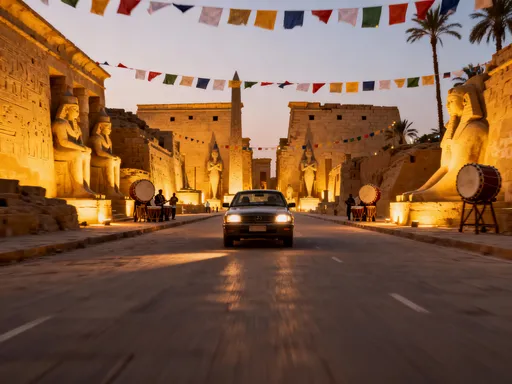
For ten days, the streets of Luxor come alive with parades known as zaffas—processions of drummers, dancers, and elaborately decorated horse-drawn carriages. Flags in green, gold, and crimson flutter above alleyways. The scent of grilled meat, sweet hibiscus tea, and frankincense drifts through the air. At night, the temple itself becomes a stage: illuminated in warm amber light, it hosts spiritual chanting and folk music that resonates against 3,000-year-old columns. The festival is both sacred and celebratory, a rare blend of reverence and revelry that defines the Egyptian spirit.
Self-driving enhances the ability to follow this rhythm across space and time. One evening, you might witness a boat procession on the Nile, where lantern-lit vessels carry musicians between East and West Bank landmarks. The next morning, a local vendor might direct you to a neighborhood where children are painting festival banners by hand. With a car, you can move fluidly between these events, adjusting your route as new celebrations emerge. GPS updates, combined with real-time conversations with residents, allow for a responsive, organic journey—one that mirrors the festival’s own unpredictable energy.
The Road Experience: Car Culture in Southern Egypt
Driving in southern Egypt offers a unique blend of adventure and practicality. The roads around Luxor are generally well-maintained, especially those connecting major archaeological sites like Karnak, Luxor Temple, and the Valley of the Kings. Main arteries are paved and clearly marked, though side streets in older neighborhoods can be narrow and uneven. Traffic moves at a relaxed pace compared to Cairo, but during festival season, congestion increases in central areas as processions and temporary markets occupy roadways. Understanding local driving customs—such as frequent hand gestures, flexible interpretations of lane markings, and the importance of patience—goes a long way in ensuring a smooth experience.
Travelers have two primary options for vehicles: renting from international agencies at Luxor International Airport or hiring a local driver with a private car. International rentals offer modern, air-conditioned vehicles with GPS and insurance, ideal for independent travelers comfortable navigating foreign roads. Local hires, while often lacking advanced navigation tools, come with the invaluable benefit of a guide who knows the city’s hidden routes and festival hotspots. Many drivers are eager to share stories, recommend food stalls, or alert you to last-minute changes in parade schedules. Both options have merit, and the choice depends on your comfort level and desire for autonomy.
Navigation tools are essential. Offline maps from apps like Google Maps or Maps.me work reliably, even in areas with limited connectivity. It’s wise to download regional maps before arrival. Fuel stations are readily available along main roads, and most accept cash, though carrying Egyptian pounds is recommended. Parking near festival zones can be challenging, but designated lots and street-side spaces are usually marked. In some cases, locals may gesture you toward informal lots run by community groups—small fees support neighborhood initiatives and are considered part of the cultural exchange. Safety is generally high, but travelers should remain aware of surroundings, especially during evening celebrations with large crowds.
Hidden Stops Only Drivers Can Reach
One of the greatest advantages of self-driving in Luxor is access to experiences beyond the reach of standard tours. While most visitors concentrate on the grand temples and tombs, the true soul of the festival often lies in quieter, more personal moments—accessible only to those with the freedom to explore. These hidden stops are not listed in guidebooks, but discovered through curiosity, conversation, and the willingness to follow a dirt path or a local’s nod.
Consider the neighborhood zaffas—smaller wedding processions that wind through residential streets during festival season. While major parades are public spectacles, these intimate celebrations are deeply personal. A driver might hear distant drumming and, upon inquiry, be directed to a side street where a family dances beneath handmade paper lanterns. Observing with respect—maintaining distance, smiling, perhaps offering a quiet greeting—can lead to warm acknowledgments, even an invitation to share a cup of tea. These moments of connection are fleeting but profound.
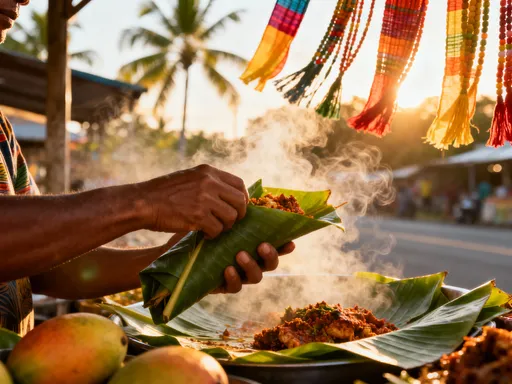
Another hidden gem is the cluster of family-run food stalls near the northern edge of Karnak Temple. Away from the tourist-centric markets, these vendors serve festival specialties: hawawshi (spiced meat in baked bread), sweet basbousa cake, and carob juice served in clay cups. The atmosphere is communal, with locals laughing and children darting between tables. A driver can arrive early, before the midday rush, and enjoy a peaceful meal while watching preparations for the evening’s events.
Finally, riverside viewpoints along the Nile’s west bank offer unmatched perspectives on nighttime illuminations. While many tourists view the temples from the east bank, a short drive across one of the bridges reveals quiet stretches of riverbank where locals gather to watch the lights reflect on the water. Sitting in your car with the windows down, listening to distant music and the soft lapping of waves, creates a moment of serene contemplation. These experiences—unscripted, uncommercialized, and deeply human—are the rewards of driving with intention.
Temple Lights & Night Drives: A Different Luxor
By day, Luxor’s monuments command awe through scale and craftsmanship. By night, during festival season, they awaken with a different kind of magic. Illumination transforms stone into something ethereal—columns glow like torches, hieroglyphs shimmer, and the sky above hums with the energy of celebration. Night drives between sites offer a cinematic experience, where the landscape shifts from shadow to radiance with each turn of the road. The journey itself becomes part of the spectacle.
Luxor Temple, bathed in golden light, appears to float above the city. The avenue of sphinxes leading to Karnak seems to stretch into infinity, each statue softly lit, their stone faces serene under the moon. Driving along the corniche, the Nile glimmers beside you, dotted with boats carrying musicians and revelers. The air carries a blend of oud music, laughter, and the occasional call to prayer—a symphony of tradition and festivity. Unlike daytime visits, where heat and crowds can overwhelm, nighttime exploration feels intimate, almost sacred.
Driving at night also allows for a more reflective pace. You can pause at a quiet overlook, step out, and simply absorb the scene. There’s a moment—just after dusk—when the city transitions from daily routine to celebration, and the lights come on one by one. It’s a visual metaphor for the festival itself: the past rekindled, the community reunited, the spirit renewed. With a car, you’re not confined to a single viewpoint. You can move from the grandeur of the temple complex to the quiet joy of a neighborhood gathering, experiencing both the monumental and the personal in a single evening.
Local Encounters: When the Road Leads to People
In the end, the most lasting memories of Luxor’s festival season are not of monuments, but of people. The true richness of the experience lies in human connection—those unplanned moments when a smile, a shared drink, or a few words bridge cultures. Self-driving creates the space for these encounters by removing the buffer of a tour group, placing you directly in the flow of local life.
One evening, while parked near a side street where children were hanging lanterns, an elderly man gestured for me to join a small gathering in his courtyard. Without speaking much English, he poured tea into small glasses, offered dates, and pointed to a photograph of his grandfather, who had worked as a guide at Karnak. Though we couldn’t converse deeply, the gesture spoke volumes—a welcome, a sharing of heritage, a moment of mutual respect. Another time, a young vendor near a parade route taught me a few steps of a traditional dance, laughing as I tried to keep rhythm with the drumbeat. These interactions, brief but genuine, are the soul of travel.
To foster such moments, a few simple practices help. Learning basic Arabic phrases—such as *salaam alaikum* (peace be upon you), *shukran* (thank you), and *iza mitasa7 al-7al?* (excuse me)—shows respect and opens doors. Dressing modestly, especially during religious events, demonstrates cultural sensitivity. And perhaps most importantly, approaching each interaction with humility—recognizing that you are a guest in someone’s home—creates the foundation for meaningful exchange. The car may carry you across the city, but it is openness and kindness that carry you into the heart of the festival.
Putting It All Together: Your Festival Drive Plan
For those ready to embark on this journey, a well-structured yet flexible itinerary can maximize both cultural immersion and comfort. A suggested three-day self-drive plan during festival season balances iconic landmarks with authentic local experiences. Day one begins on the East Bank: start at Karnak Temple at sunrise, then drive to a local market for breakfast. Spend the afternoon exploring Luxor Temple, and as evening falls, follow the sound of music to a neighborhood zaffa. End the night with a riverside drive along the corniche, watching the illuminated temples reflect on the Nile.
Day two shifts to the West Bank. Cross the bridge early to avoid traffic, visit the Valley of the Kings and Hatshepsut’s Temple, then seek out a family-run café in a village near Deir el-Medina. In the late afternoon, return to the east side and explore side streets near the Abu al-Haggag Mosque, where festival preparations peak. If timing aligns, attend the main boat procession on the Nile, best viewed from a quiet stretch of riverbank accessible by car.
Day three offers spontaneity. Use the morning to revisit a favorite site or explore a hidden courtyard mentioned by a local. Pack a small bag with water, snacks, a flashlight, and a portable charger—essential for long days without reliable outlets. In the afternoon, let the festival guide you: follow drumming, ask for directions, accept invitations. The goal is not to see everything, but to be present in the moment.
Practical tips enhance the experience. Avoid midday driving when temperatures rise, and plan indoor or shaded stops between 11 a.m. and 3 p.m. Carry modest clothing to respect cultural norms, especially near religious sites. Download offline maps and keep a paper backup. And above all, embrace flexibility—road closures, unexpected celebrations, and changing plans are not disruptions, but part of the adventure.
Driving through Luxor during festival season is more than a vacation. It is a pilgrimage into the living heart of a civilization that honors its past while dancing in the present. The car is not just a vehicle, but a companion on a journey through time, culture, and human connection. In the glow of ancient stone, the rhythm of drums, and the warmth of a shared cup of tea, you don’t just witness history—you become part of it. And when the engine quiets and the journey ends, the echoes of Luxor’s festival soul remain, not as memories of places, but as a deep, quiet knowing: that to travel with intention is to truly arrive.