This Is What Happens When You Hike the Galapagos’ Hidden Trails
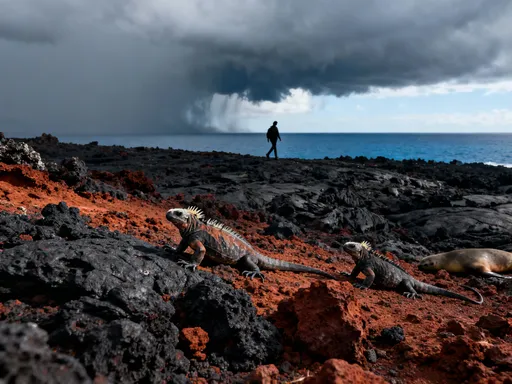
Hiking in the Galapagos isn’t just about walking—it’s stepping into a living lab of evolution. I never expected to see marine iguanas basking beside lava trails or blue-footed boobies nesting just off the path. These protected islands guard some of Earth’s rarest species, and every trail reveals nature untouched. It’s not just a trek—it’s a journey into the wild soul of our planet. With each step across ancient lava fields and through misty highland forests, you come face to face with creatures found nowhere else on Earth. This is not a vacation in the ordinary sense. It is an immersion into a world where nature moves at its own pace, undisturbed by time, shaped by isolation, and preserved through careful stewardship. The Galapagos Islands offer a rare kind of adventure—one that transforms the way you see life itself.
Why the Galapagos Is a Hiker’s Unlikely Paradise
The Galapagos Islands are often associated with cruise ships and snorkeling excursions, yet few travelers realize how exceptional they are for hiking. Unlike more traditional trekking destinations such as Patagonia or the Himalayas, the Galapagos offers a subtler, more intimate form of exploration. Here, the trails are not carved for summit views alone but to guide you through ecosystems that have evolved in near-total isolation for millions of years. The archipelago’s volcanic origins have created a dramatic and varied landscape, from jagged lava flows frozen mid-flow to soft, green highlands carpeted in ferns and wild orchids. These are not just scenic backdrops—they are active chapters in an ongoing natural story.
Because tourism has historically centered on boat-based itineraries, the land-based hiking experience remains relatively undiscovered by the masses. This gives hikers a rare sense of solitude, even during peak seasons. On many trails, you may walk for hours without encountering another group, accompanied only by the rustle of lava lizards darting between rocks or the distant call of a Galapagos dove. The absence of large crowds allows for a deeper connection with the environment, turning each hike into a personal discovery rather than a checklist of photo opportunities.
What makes the Galapagos truly unique as a hiking destination is the seamless integration of geology, biology, and conservation. Trails wind past steaming fumaroles, across pahoehoe lava sculpted by ancient eruptions, and along coastal bluffs where waves crash against black rock. Each step reveals a new layer of the islands’ story. The trails are not merely paths through nature—they are corridors through time. You walk where Charles Darwin once stood, observing the same finches and tortoises that helped shape our understanding of evolution. This convergence of science, history, and raw natural beauty elevates Galapagos hiking from a physical activity to an intellectual and emotional journey.
Moreover, the protected status of the islands ensures that these landscapes remain pristine. Unlike many popular trekking regions where erosion and overuse degrade the terrain, the Galapagos maintains its integrity through strict visitor management. This protection allows hikers to experience nature as it was meant to be—unfiltered and unaltered. There are no souvenir stands on the trails, no concrete walkways, no artificial lighting. What you encounter is real, wild, and profoundly moving. For those seeking a hiking experience that transcends physical challenge, the Galapagos offers something rare: a chance to walk in silence through one of Earth’s last true wildernesses.
The Role of Protected Areas in Preserving the Wild
Over 97% of the Galapagos Islands’ land area is protected within the Galapagos National Park, a UNESCO World Heritage Site established in 1959. This level of protection is among the highest in the world and serves as the foundation for the islands’ ecological resilience. The park’s mission is not just to conserve species but to maintain the delicate balance of entire ecosystems. Every hiking trail, every visitor site, is carefully monitored and managed to minimize human impact. This rigorous approach has allowed native species to thrive, some of which were once on the brink of extinction.
Access to hiking areas is strictly regulated. All visitors must be accompanied by certified naturalist guides who are trained in both ecology and safety protocols. These guides do more than interpret the landscape—they act as stewards, ensuring that tourists follow rules designed to protect the environment. Designated trails are clearly marked, and stepping off them is prohibited. This prevents soil erosion, avoids trampling fragile vegetation, and reduces the risk of introducing invasive species through seeds carried on footwear. The conservation fee paid upon arrival—currently $100 for international tourists—funds park operations, scientific research, and invasive species control programs.
These measures have had a measurable impact. Giant tortoises, once hunted to near extinction, now roam freely in the highlands of Santa Cruz and Isabela. Their slow, deliberate movements across the trails are a testament to successful conservation. Similarly, land iguanas, once wiped out from several islands, have been reintroduced through breeding programs and are now visible along certain routes. The presence of these animals in their natural habitat, unafraid of humans, is not due to habituation but to the absence of predators and the consistency of protection.
Wildlife behavior in the Galapagos reflects this stability. Birds such as the flightless cormorant and the Galapagos penguin go about their daily routines without alarm, nesting just meters from walking paths. Frigatebirds soar overhead, their red throat pouches inflated in courtship displays, undisturbed by the quiet observers below. This level of access to undisturbed animal life is unparalleled. It is not because the animals are tame, but because they have never needed to fear. The success of the protected area model here demonstrates that when conservation is prioritized, nature can recover and flourish—even in the face of past human damage.
The Galapagos also serves as a global example of how tourism and preservation can coexist. By limiting the number of visitors, enforcing strict guidelines, and investing in education, the park ensures that tourism supports rather than undermines conservation. Hikers are not passive consumers of scenery; they become participants in a larger mission. The experience fosters a sense of responsibility, encouraging travelers to carry these values home. In a world where wild places are shrinking, the Galapagos stands as proof that with commitment, protection works.
Top Hiking Zones and What Makes Each Unique
While the Galapagos consists of 19 major islands and over 100 islets, only a handful are accessible for hiking, each offering a distinct experience shaped by its geology, elevation, and ecological zone. Santa Cruz, one of the most visited islands, is home to the Sierra Negra volcano trail, which leads hikers across one of the largest calderas in the world. The crater spans approximately 9 kilometers in diameter, and the hike along its rim offers sweeping views of the volcanic interior, fumaroles, and layered lava flows. The contrast between the green highland vegetation and the dark, cracked lava field creates a surreal, almost lunar landscape.
Isabela Island, the largest in the archipelago, offers even more dramatic terrain. The same Sierra Negra volcano extends onto Isabela, where the trail begins at the edge of the highlands and descends into the ash fields of the caldera floor. Another notable hike is the route to Volcán Alcedo, known for its population of wild giant tortoises. During the wet season, these gentle giants migrate between the highlands and the coast, and hikers often encounter them ambling across the path, their shells glistening with rain. The Alcedo trail also passes through dense Scalesia forests, a type of daisy tree unique to the Galapagos, creating a canopy that feels more like a temperate rainforest than a tropical island.
San Cristóbal Island provides a different kind of hiking experience, blending coastal beauty with historical significance. The Interpretation Center trail in Puerto Baquerizo Moreno introduces visitors to the island’s human and natural history, while the El Junco lagoon trail leads to the only permanent freshwater lake in the archipelago. Surrounded by lush vegetation, the lagoon is a haven for birdwatchers, offering sightings of Galapagos rails, finches, and frigatebirds. The trail’s moderate difficulty and shaded paths make it ideal for families and those seeking a gentler introduction to Galapagos hiking.
Fernandina Island, one of the youngest and most remote, offers the most pristine and adventurous hiking opportunities. The Punta Espinosa trail is a flat, easy walk across recent lava flows, yet it delivers some of the most concentrated wildlife sightings in the Galapagos. Marine iguanas bask in large colonies, flightless cormorants build nests near the shore, and Galapagos hawks patrol the skies. Because Fernandina has never had introduced species like rats or goats, its ecosystem remains intact, making it a living laboratory of evolutionary processes. Access is limited to a few tour operators, preserving its untouched character.
Each of these hiking zones reflects a different facet of the Galapagos’ ecological diversity. From high-altitude craters to coastal lava fields, the terrain tells the story of ongoing volcanic activity and gradual colonization by life. The flora and fauna vary significantly from island to island, a phenomenon Darwin observed and studied. Hikers today follow in his footsteps, witnessing firsthand how isolation leads to specialization. The Galapagos is not a single destination but a collection of unique worlds, each accessible through its own trail, each offering a lesson in adaptation and survival.
What to Expect on the Trail: Terrain, Climate, and Wildlife Encounters
Hiking in the Galapagos is as much about preparation as it is about wonder. The terrain is unforgiving in places—uneven lava rock, loose volcanic gravel, and steep ascents require sturdy footwear and a moderate level of fitness. Trails are not paved or graded like those in national parks elsewhere; they are natural paths worn into the landscape. On islands like Isabela and Fernandina, you may spend hours walking across pahoehoe lava, its smooth, ropy surface often sharp underfoot. Elsewhere, aa lava—jagged and fragmented—can make footing treacherous, especially when descending slopes.
Climate varies by island and elevation. Coastal areas are typically warm year-round, with temperatures averaging 25–30°C (77–86°F). The highlands, however, can be significantly cooler and often shrouded in mist, a phenomenon known locally as garúa. This fine, drizzly fog is common from June to December, the cooler season, and can make trails slippery. Sun exposure is intense, even on cloudy days, due to the equatorial location. Hikers must be prepared for sudden changes—sun one moment, mist the next—especially when ascending from coast to highland.
Wildlife encounters are not just possible—they are guaranteed. But they unfold on nature’s terms. You may need to pause as a giant tortoise crosses the trail, taking minutes to pass with unhurried dignity. Nesting birds may be just off the path, requiring hikers to stay quiet and at a distance. On coastal trails, tidal zones can shift rapidly, cutting off routes or bringing marine iguanas closer to shore. These moments are not obstacles but part of the experience. They teach patience, respect, and presence.
The magic of these encounters lies in their authenticity. Unlike zoos or wildlife parks, there are no barriers, no feeding, no performances. Animals behave naturally because they are not conditioned to human presence—they simply coexist. A Galapagos hawk may perch on a nearby rock, watching you with calm curiosity. A sea lion pup might waddle across the trail, unaware of its photogenic appeal. These interactions are not staged; they are the result of decades of protection and responsible tourism.
For many hikers, the most profound moment comes not from seeing a rare species but from feeling the weight of time and isolation. Standing on a lava field that erupted just decades ago, knowing that life is slowly reclaiming it, one realizes how dynamic and resilient nature is. The Galapagos is not a static museum but a living, breathing system in constant flux. Hiking here is not just about covering distance—it is about bearing witness to evolution in action.
How to Hike Responsibly in a Fragile Ecosystem
The principle of leave no trace takes on special meaning in the Galapagos. Because the ecosystem is so delicate, even small actions can have outsized consequences. The most basic rule is simple: do not leave anything behind and do not take anything with you. This includes organic waste—no fruit peels, no food scraps. What might seem harmless in other environments can introduce invasive species or disrupt animal diets. Feeding wildlife, even with good intentions, is strictly prohibited and can lead to dependency or aggression.
Touching animals is also forbidden. While it may be tempting to stroke a marine iguana or take a closer look at a nesting bird, physical contact can stress animals or transfer pathogens. Many species here have no natural defenses against diseases carried by humans or introduced species. The same applies to plants—stepping on native vegetation can damage root systems and open the door for invasive weeds. All trails are designed to concentrate foot traffic and minimize impact, so staying on the path is not just a rule but a necessity.
Certified naturalist guides play a crucial role in enforcing these practices. They are trained to recognize signs of stress in animals, monitor group behavior, and intervene when necessary. Their presence ensures that every hike adheres to conservation standards. They also educate visitors about the significance of what they are seeing, turning a walk into a learning experience. Their expertise enhances the journey, making it more meaningful and respectful.
Recommended gear includes closed-toe hiking boots with good grip, a wide-brimmed hat, UV-protective clothing, and a reusable water bottle. Sunscreen and insect repellent should be biodegradable to avoid contaminating the environment. Pack light, but pack smart—there are no facilities on most trails, and resupply is impossible. Bringing all trash back to town is a non-negotiable practice.
Perhaps the most important responsibility is maintaining a quiet, observant presence. Loud noises, sudden movements, and large groups can disturb nesting birds and marine life. The goal is not to dominate the landscape but to move through it with humility. When hikers adopt this mindset, they become part of the conservation effort, not just visitors passing through.
Planning Your Hike: Logistics, Permits, and Local Insights
Unlike independent hiking destinations, Galapagos trails are not freely accessible. Most hikes must be taken as part of organized tours operated by licensed companies. This system ensures that all visitors are accompanied by certified guides and that environmental regulations are followed. Independent hiking is only permitted in a few areas near towns, such as the Itabaca Channel trail on Santa Cruz or the Cerro Tijeretas path on San Cristóbal. For all other sites, joining a tour is mandatory.
The visitor permit process begins upon arrival at the airport, where tourists pay the Galapagos National Park fee and undergo a biosecurity inspection to prevent the introduction of foreign species. Tour operators handle the logistics of trail access, securing permits for specific sites and dates. These permits are limited, which helps control crowding and protect sensitive areas. Booking hikes several months in advance is advisable, especially during peak seasons from June to December.
The best time to visit depends on your preferences. The cooler season (June–December) offers drier conditions in the highlands and excellent visibility for hiking. The warmer season (December–May) brings hotter temperatures and occasional rain, but also calmer seas and vibrant greenery. Both periods have their advantages, though many hikers prefer the cooler months for more comfortable trekking conditions.
Most day hikes last between two and five hours, with options for all fitness levels. Some travelers combine land-based hiking with boat excursions to maximize their experience. Staying in island hotels rather than cruising allows for deeper exploration of a single island’s trails. Local operators offer guided hikes that include transportation, water, and expert commentary, making them a convenient and responsible choice.
Packing essentials include lightweight, moisture-wicking clothing, a daypack, binoculars, and a camera with a zoom lens. Trails are remote and unshaded, so sun protection is critical. Managing expectations is also important—this is not a luxury hiking experience. There are no lodges on the trails, no rest stops, no cell service. What you gain instead is authenticity, solitude, and a direct connection to one of Earth’s most extraordinary places.
Why This Hiking Experience Changes How You See Nature
Walking the hidden trails of the Galapagos does more than satisfy a sense of adventure—it alters your perception of the natural world. There is a moment, different for everyone, when it sinks in: you are standing in a place where life evolved without human interference. The finch that hops beside the trail, the tortoise that blinks slowly under the sun, the hawk that circles above—they are not exhibits. They are survivors of a rare and fragile balance. This realization brings awe, but also responsibility.
The Galapagos is a living testament to the power of conservation. Where once species were hunted, habitats destroyed, and ecosystems disrupted, careful management has brought recovery. The trails you walk today were once threatened by goats, rats, and unchecked tourism. Now, they are pathways of renewal. Every step is a reminder that nature can heal—if we let it.
For many hikers, the experience becomes a benchmark for future travel. It raises the question: what kind of traveler do I want to be? The answer, inspired by the Galapagos, is clear—mindful, respectful, and engaged. This is not just about choosing eco-friendly tours or following rules. It is about carrying a deeper understanding of our role in the natural world.
Hiking in the Galapagos is not merely recreation. It is education. It is reflection. It is a call to protect the rare and irreplaceable. In a time of climate change and biodiversity loss, places like the Galapagos offer hope. They show that with care, commitment, and humility, we can coexist with nature rather than dominate it. And when you return home, the memory of those lava trails, those quiet moments with ancient creatures, stays with you—not as a souvenir, but as a commitment.