What Hawaii's Food Culture Taught Me About Aloha Spirit
You know what I didn’t expect? That food in Hawaii would feel like a hug from the islands themselves. It’s not just about taste—it’s history, land, and people on a plate. From roadside poke stands to family-run plate lunch spots, every bite tells a story. I went for the beaches but stayed for the flavors. This is more than cuisine; it’s a living culture that welcomes you with open arms and a full plate. What began as a vacation turned into a quiet revelation: to eat in Hawaii is to be invited into a deeper rhythm of life, one shaped by generations of resilience, migration, and mutual care. Food here doesn’t just sustain the body—it feeds the spirit.
The Heart of Hawaiian Identity: Food as Culture
Hawaiian food is not simply a menu—it is a living archive of identity, shaped by centuries of connection to the land and waves of cultural exchange. At its core is the Native Hawaiian concept of *‘āina*, meaning “that which feeds,” a term that reflects the deep spiritual and physical relationship between people and the earth. Traditional dishes like kalua pig, slow-roasted in an underground imu oven, are more than ceremonial—they are acts of remembrance, honoring ancestral knowledge passed down through generations. Lomi salmon, a bright salad of salted fish, tomatoes, and onions, reflects early contact with foreign traders, while haupia, a creamy coconut milk gelatin, speaks to the islanders’ mastery of native ingredients. These foods are not frozen in time; they evolve, yet remain rooted in respect for the source.
The true richness of Hawaii’s culinary landscape, however, comes from its multicultural mosaic. Beginning in the 19th century, waves of immigrants arrived to work on sugar and pineapple plantations—Japanese, Chinese, Filipino, Portuguese, Korean, and Puerto Rican families brought their flavors, techniques, and traditions. Over time, these influences didn’t just coexist—they intertwined. The Portuguese introduced malasadas, now a beloved island dessert, while Filipino workers brought adobo and pancit, both of which have found a home in local lunch plates. This blending wasn’t forced; it grew organically from shared labor, neighborhood kitchens, and interwoven lives. The food became a common language, a way of saying, “We are here, and we belong.”
Today, this fusion defines what is known as “local food,” a category distinct from both traditional Hawaiian cuisine and mainland American fare. It is humble, hearty, and deeply comforting—born not in fine dining but in homes, food trucks, and backyard gatherings. What makes it powerful is not complexity, but intention: every dish carries the weight of survival, adaptation, and generosity. To eat it is to acknowledge that Hawaii’s strength lies not in isolation, but in connection. The plate becomes a map of migration, resilience, and the quiet dignity of everyday people who built lives across oceans. In this way, food is not just sustenance—it is a form of storytelling, one that invites participation rather than observation.
Beyond the Tourist Menus: Discovering Authentic Local Eateries
Most visitors to Hawaii encounter food through resort buffets or oceanfront restaurants with panoramic views and prices to match. While these have their place, they often offer a polished, distant version of local flavor—one that prioritizes presentation over authenticity. The real heart of Hawaiian cuisine beats in places with no websites, no reservations, and sometimes no seating at all. These are the unmarked corners where culture thrives: a gas station in Hilo serving steaming bowls of saimin, a church hall in Wahiawā dishing out laulau on weekends, or a pickup truck in Kailua with a hand-painted sign reading “Poke Today.”
What these spots share is not glamour, but trust. They are run by families, often for decades, and sustained by loyal customers who value consistency over convenience. A true local eatery doesn’t need Instagrammable decor—its reputation is built on word of mouth, passed from neighbor to neighbor, auntie to cousin. You might hear, “Go to the blue shack behind the post office,” or “Ask for Aunty Leilani—she makes the best squid luau.” These directions aren’t found on maps, but they lead to some of the most meaningful meals you’ll ever have.
One of the most humbling lessons for travelers is learning to let go of expectations. These places often have limited hours—many close by 2 p.m. or only open on certain days. Menus are short, sometimes just a chalkboard with three options. There may be no air conditioning, no credit card reader, and no substitutions. And that’s the point. This isn’t service designed for mass consumption; it’s food made with care, in small batches, for people who understand its value. To eat here is to slow down, to wait if you must, and to accept that some things can’t be rushed. In doing so, you’re not just fed—you’re welcomed into a rhythm older than tourism, one shaped by patience, humility, and the quiet pride of those who keep tradition alive.
Poke: From Shoreline Snack to Global Craze
Poke—pronounced poh-kay—has become a global phenomenon, with chain restaurants serving pre-packaged bowls in shopping malls from New York to Tokyo. But in Hawaii, poke is not a trend; it is a tradition. The word itself means “to slice” or “cut,” and originally referred to fresh fish, diced by hand and seasoned simply with sea salt, limu (seaweed), and crushed kukui nuts (inamona). For generations, fishermen would prepare it on the shore, eating it straight from the bowl as a quick, nourishing meal. There was no refrigeration, no elaborate marinades—just the ocean’s bounty, treated with reverence.
Today, while modern versions include spicy mayo, sesame oil, and avocado, the best poke remains close to its roots. True quality is measured by freshness: the fish should be cut that morning, never frozen, and sourced locally. Yellowfin tuna (ahi) is the most prized, but you’ll also find octopus (tako), mackerel (‘awa), and even raw tako with ginger. The texture should be firm, the flavor clean, with seasonings that enhance rather than mask. You won’t find the most trusted poke at glossy restaurants, but at fish markets like Honolulu’s Tamashiro Market or family-run counters in Kona, where the person behind the glass knows every fish by name.
The rise of poke chains has sparked concern among locals, not because they dislike innovation, but because they see a piece of their culture being diluted. When poke becomes a standardized product, served in plastic bowls with synthetic sauces, it loses its soul. It’s no longer a connection to the sea and the people who harvest it. That’s why many Hawaiians still prefer the small vendors, the ones who won’t sell out before noon because they only make what they can source ethically and sustainably. To eat real poke is to participate in a practice of respect—for the fish, the ocean, and the hands that prepared it. It’s a reminder that some things should never be mass-produced.
Plate Lunch: Hawaii’s Ultimate Comfort Food Experience
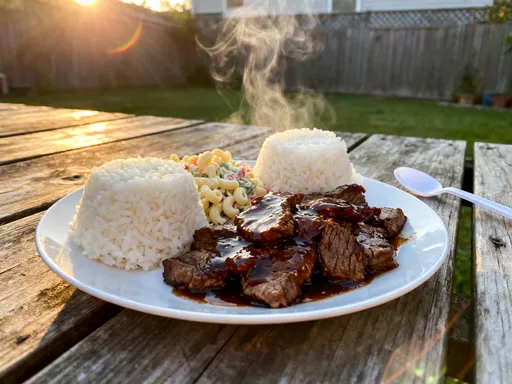
If poke is the soul of Hawaiian cuisine, the plate lunch is its heartbeat. Ubiquitous, affordable, and deeply satisfying, the plate lunch is the everyday meal of choice for locals. The formula is simple: two scoops of rice, a scoop of macaroni salad, and a main protein—often teriyaki beef, katsu chicken, or grilled mahimahi. Served on a disposable tray, wrapped in paper, and eaten with plastic utensils, it may not look like much, but it carries generations of history.
Its origins trace back to the plantation era, when workers from different ethnic backgrounds shared lunch breaks and traded food. Japanese bento boxes, Filipino ulam, and American diner fare blended into something new—a hearty, portable meal that could fuel long days in the fields. Over time, the plate lunch became a symbol of unity, a shared language of sustenance. Today, it’s found everywhere: at drive-in stands like L&L Hawaiian Barbecue, neighborhood lunch wagons, and even school cafeterias. But the best versions are still homemade or served in small, family-run spots where the rice is steaming, the mac salad is creamy with a hint of mustard, and the protein is cooked in small batches.
For visitors, identifying a great plate lunch spot isn’t about reviews or ratings—it’s about observation. Look for lines of locals, especially during midday. Notice if the rice is covered with a dome to keep it warm, or if the grill is constantly in use. A simple menu is often a good sign; places that focus on a few specialties tend to do them well. And don’t be surprised if your katsu chicken comes with a slice of pineapple—this small touch, borrowed from Hawaiian sweet-and-sour flavors, is a nod to the islands’ love of balance. The plate lunch isn’t fine dining, but it’s something more valuable: it’s belonging on a plate. To eat one is to join the rhythm of daily life, to eat like someone who knows what comfort really means.
Farmers Markets and the Rise of Locally Sourced Flavors
One of the most uplifting trends in Hawaii’s food culture is the resurgence of farmers markets. Once overlooked in favor of imported goods, these open-air gatherings are now vibrant hubs of community, sustainability, and cultural pride. Every island hosts them—on weekends in town centers, church parking lots, or under banyan trees—and they draw growers, artisans, and families eager to connect with their food sources. Here, you won’t find mass-produced vegetables or plastic-wrapped fruit. Instead, tables overflow with lilikoi (passion fruit), rambutan, starfruit, and fresh coconuts cracked open on demand.
What makes these markets special is direct access. You’re not just buying food—you’re meeting the person who grew it. A farmer from Waimea might hand you a sample of purple sweet potato, explaining how it’s been cultivated for generations. A taro farmer from Kaua‘i might show you how poi is made, mashing the cooked root into a smooth, earthy paste that’s both nutritious and sacred. Coffee growers from Kona or Ka‘ū offer small cups of freshly brewed brew, proud to share beans grown in volcanic soil. These interactions aren’t transactions; they’re exchanges of knowledge, gratitude, and trust.
Supporting these vendors does more than provide fresh ingredients—it strengthens the entire island food system. Hawaii imports over 80% of its food, making it vulnerable to supply chain disruptions. By choosing local produce, consumers help reduce that dependency and support sustainable agriculture. Many farmers use regenerative practices, preserving watersheds and protecting native ecosystems. Additionally, the revival of taro farming—a crop central to Hawaiian identity—has become a symbol of cultural reclamation. Eating locally grown food isn’t just a choice; it’s an act of solidarity with the land and its people. At the farmers market, every purchase becomes a quiet affirmation: we value what grows here.
The Unspoken Rules: How to Eat Like a Local (Not a Tourist)
Respecting Hawaiian food culture goes beyond what you order—it’s how you engage with it. There are no official rulebooks, but there are unspoken guidelines that, when followed, open doors to warmer welcomes. First, bring your own container. Many local spots don’t offer takeout boxes, but they’ll happily pack your leftovers in a reusable Tupperware if you have one. It’s practical, eco-friendly, and shows you’re mindful of waste. Second, honor the hours. If a place closes at 1:30 p.m., don’t knock on the door at 1:35 expecting service. These are often family-run operations, and time off is sacred.
Another key rule: don’t ask for substitutions. In mainland restaurants, customizing your meal is normal. In a small Hawaiian kitchen, it’s not. The menu is what it is—crafted with care and efficiency. Asking for gluten-free soy sauce or no rice might seem reasonable, but it disrupts the flow and can be seen as disrespectful. If you have dietary needs, find a place that accommodates them, but don’t expect every spot to adapt. Instead, come with curiosity and flexibility. Try what’s offered. You might discover something you love.
Patience is also essential. Lines move slowly. Orders might take time. The person behind the counter may not smile or make small talk—but that doesn’t mean they’re unfriendly. In many cultures, warmth is shown through action, not words. When your plate is handed over with care, when the rice is perfectly steamed, when the poke is extra generous—that’s the kindness. To eat like a local is to slow down, to listen more than you speak, and to accept that some traditions aren’t meant to be changed. When you do, you’re not just a visitor—you’re a guest, and that distinction matters.
Food as a Gateway to Deeper Travel: Building Connections Through Shared Meals
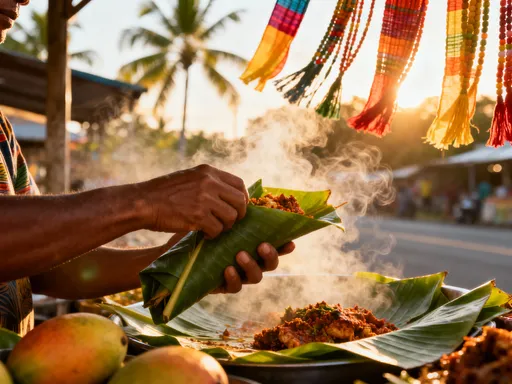
Some of the most profound moments of my time in Hawaii happened not at famous landmarks, but around food. I remember sitting on a picnic bench in Maui, sharing a bento box with a group of surfers who invited me to join them after a morning swim. No introductions, just a nod and a plate pushed my way. I recall a backyard luau in Kaua‘i, where an elder taught me to fold banana leaves around pork and taro, explaining the significance of each layer as we worked. In Hilo, a poke vendor let me watch her cut ahi, her hands moving with decades of precision, then handed me a sample with a quiet, “Try this. It’s good today.”
These weren’t staged experiences—they were genuine moments of inclusion, made possible because I approached food with respect and openness. Sharing a meal, especially in Hawaiian culture, is an act of trust. It says, “I welcome you into my world.” When you accept that invitation, you’re not just tasting flavors—you’re building bridges. You learn names, stories, and small truths about life on the islands. You hear about family recipes, fishing spots, and the best time to pick lilikoi. These conversations don’t happen in guidebooks, but they stay with you far longer.
Food, in this way, becomes the most authentic form of travel. It bypasses the performative and goes straight to the human. It reminds us that connection doesn’t require grand gestures—just a willingness to sit, to listen, and to eat together. In a world that often feels fragmented, Hawaii’s food culture offers a model of unity: diverse, resilient, and deeply generous. It doesn’t ask you to be perfect—just present. When you eat with intention, you’re not just feeding yourself; you’re honoring a legacy of aloha, one meal at a time.
Hawaii’s food culture isn’t just about what’s on the plate—it’s a doorway into the soul of the islands. By choosing to eat with curiosity and respect, travelers don’t just taste flavors; they participate in a legacy of aloha, resilience, and unity. The truest way to know Hawaii? Let its food speak first. Let it tell you stories of the sea, the soil, and the people who have cared for them. Let it slow you down, humble you, and remind you that the simplest meals often carry the deepest meaning. In the end, the most nourishing thing Hawaii offers isn’t a dish—it’s a way of being.