You Won’t Believe These Cultural Gems in Georgetown
Georgetown, Guyana feels like a secret the world hasn’t fully discovered. Tucked between the Caribbean and South America, this vibrant city pulses with color, rhythm, and soul. I wandered its colonial streets, danced at local festivals, and sipped fresh sugarcane juice at bustling markets—every moment felt authentically alive. If you’re chasing Instagram-worthy experiences rooted in real culture, not tourist traps, Georgetown delivers. Let me show you the sights, sounds, and stories that made my camera roll and my heart smile.
The Soul of a Hidden Capital
Georgetown stands as a quiet yet powerful testament to cultural harmony. Though it serves as the capital of one of South America’s smallest nations, its influence resonates far beyond its borders. This is a city shaped by centuries of convergence—where African, Indian, Indigenous, British, and Dutch legacies coexist not as museum exhibits, but as living threads in everyday life. Walking through its neighborhoods, you’ll hear English spoken with lilting Caribbean cadence, smell roti sizzling beside smoked meat from Amerindian pits, and see children playing cricket in schoolyards while elders chant folk songs in Creole. It’s this seamless blending that gives Georgetown its soul.
Founded by the French in the late 18th century and later developed under British rule, Georgetown bears the architectural marks of colonial planning—but with a distinctly local heartbeat. Wide avenues shaded by royal palms were once designed for carriages; today, they host bicycle vendors and brightly painted minibuses. The city’s grid layout reflects European order, yet life unfolds in organic, joyful bursts. There’s no forced performance of heritage here—traditions are not revived for tourists, they are simply lived. This authenticity is rare in an age where many destinations sanitize culture for mass appeal.
What makes Georgetown particularly special is how its history informs modern identity. Emancipation Day is celebrated with pride, not just as a historical event but as a living memory carried through music, storytelling, and community gatherings. Similarly, the legacy of indentured laborers from India is honored not only during festivals but in daily rituals—from morning prayers at mandirs to the careful preparation of home-cooked dal and chutney. These are not isolated customs; they are interwoven into the city’s social fabric, creating a mosaic that feels both diverse and unified.
For travelers seeking meaningful connection, Georgetown offers something increasingly rare: a place where culture isn’t packaged, it’s shared. You won’t find scripted performances behind velvet ropes. Instead, you’ll be invited to sit on a porch and sip ginger tea with a grandmother who remembers when electricity first arrived. You’ll hear steelpan music drifting from a backyard rehearsal. These moments aren’t staged—they’re spontaneous expressions of a community confident in its identity. In a world where so many cities look alike, Georgetown remains refreshingly, unapologetically itself.
Colors That Stop You in Your Tracks
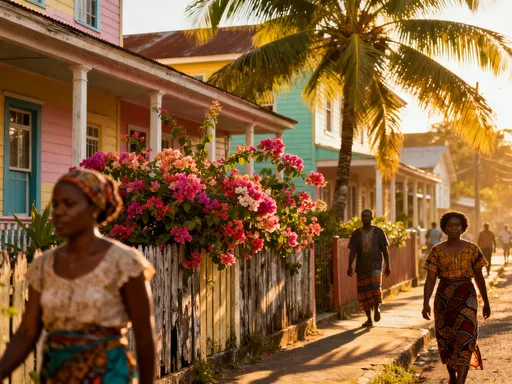
If there’s one thing that defines Georgetown’s visual language, it’s color. Not the muted tones of gentrified districts or the sterile hues of modern developments, but bold, unapologetic bursts of pigment that reflect joy, resilience, and creativity. Buildings here don’t just stand—they sing. Wooden homes painted in turquoise, coral, mustard yellow, and deep magenta line the streets, their clapboard walls adorned with intricate fretwork and gabled roofs. Even government buildings wear vibrant coats of paint, as if refusing to blend into the background.
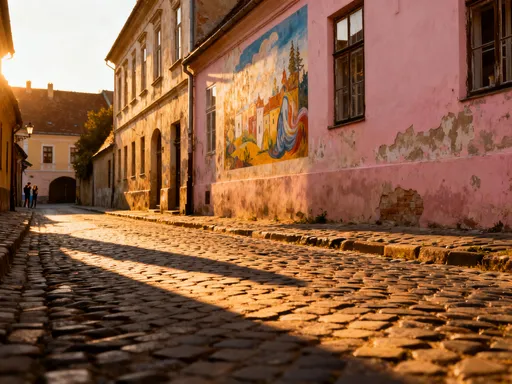
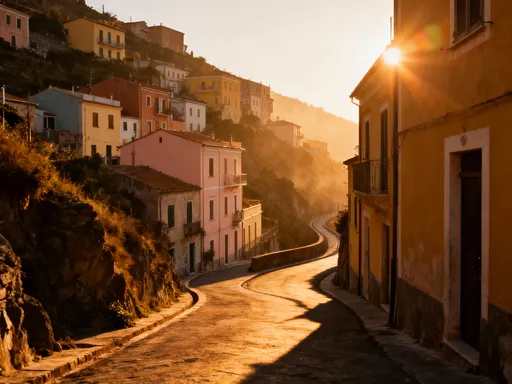
This chromatic celebration isn’t accidental. It stems from a tradition of using color not only for beauty but for meaning. In Creole architecture, which dominates much of the city, bright colors often signify the function or mood of a space—cool blues for relaxation, warm reds for energy, greens for growth. Many homes are repainted annually, especially before major holidays, turning entire blocks into living canvases. The effect is magical, particularly at golden hour when the low sun bathes the facades in a honeyed glow, making the colors appear to pulse with light.
One of the most iconic spots for photography is the St. George’s Cathedral, the tallest wooden church in the world. Its pale green exterior and towering spire rise gracefully above the skyline, a marvel of 19th-century craftsmanship. Inside, sunlight filters through stained glass, casting kaleidoscopic patterns on polished floors. Just a short walk away, the Georgetown Seawall offers a different kind of visual poetry—a three-mile stretch of promenade where locals gather at dusk to stroll, jog, or simply watch the Atlantic waves roll in. The iron lampposts, painted white and topped with globes, create a rhythmic pattern against the darkening sky, while couples, families, and dog walkers fill the scene with quiet life.
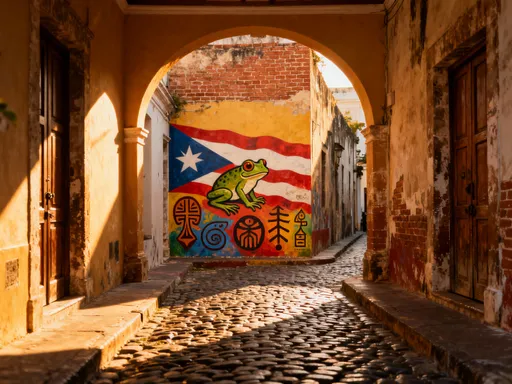
Neighborhoods like Kingston and Belmont are especially rich in visual texture. Kingston, once a settlement for freed slaves, is now known for its community pride and artistic spirit. Murals depicting historical figures, ancestral symbols, and messages of unity cover walls, often created by local youth groups. Belmont, home to a large Indo-Guyanese population, dazzles during Diwali when every home is lit with diyas and string lights, transforming the area into a constellation of warmth. These aren’t tourist attractions—they’re lived-in spaces where beauty emerges naturally from daily life. For photographers, the challenge isn’t finding beauty; it’s choosing where to point the lens.
Markets Alive with Rhythm and Flavor
No visit to Georgetown is complete without stepping into the Stabroek Market, the city’s bustling commercial and cultural heart. More than just a place to buy goods, this iron-canopied structure—originally built in the 1880s—pulses with energy, sound, and scent. As you enter, the air thickens with the aroma of nutmeg, cinnamon, fresh coconut, and grilled fish. Vendors call out in melodic voices, their stalls overflowing with pyramids of mangoes, pineapples, golden pine, and ackee pods. Bunches of green seasoning—cilantro, culantro, and thyme—hang like fragrant garlands, ready to flavor the day’s meals.
What makes Stabroek extraordinary is its rhythm. It operates not on digital transactions or barcode scanners, but on human interaction. Money changes hands slowly, with care. Bargaining is gentle, almost musical—a back-and-forth of smiles and soft words. Women in headwraps, some wearing traditional madras prints, preside over baskets of cassava, eddo, and yams, their hands moving with practiced ease. Nearby, a man slices open a coconut with a machete, handing it to a child with a wink. Every transaction feels personal, every exchange an opportunity for connection.
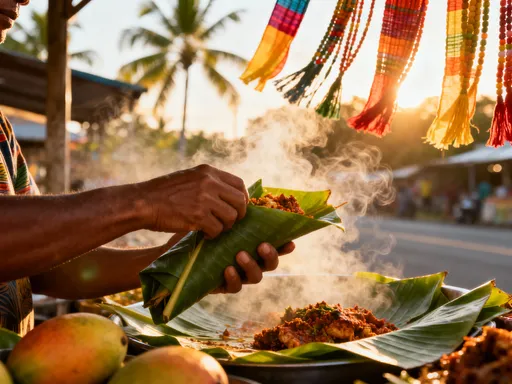
But the market is more than commerce—it’s a living archive of Guyanese cuisine. Here, you’ll find ingredients that form the backbone of the nation’s food: turmeric root for golden rice, green pigeon peas for cook-up rice, and crab for curry dishes. Vendors sell handmade spice blends in brown paper packets, their recipes passed down through generations. And just outside the main hall, food stalls offer some of the most authentic bites in the city. Try a warm roti filled with curried chickpeas or salted meat, its edges crisp from the griddle. Sip fresh sugarcane juice pressed on the spot, sweet and grassy, served in a cut bamboo cup.
For visitors, the market is both sensory overload and deep comfort. It’s loud, crowded, and humid—but also welcoming. Children dart between stalls, elders sit on wooden crates sharing stories, and musicians sometimes appear with guitars or steel pans, turning the aisles into impromptu concert halls. This is not a sanitized food hall with Instagrammable neon signs. This is real life, unfolding with honesty and warmth. To eat here, to shop here, is to participate in something genuine—a celebration of sustenance, community, and flavor that can’t be replicated elsewhere.
Festivals That Light Up the Streets
In Georgetown, celebration isn’t reserved for private parties or exclusive clubs—it spills into the streets, inviting everyone to join. The city’s festival calendar is a vibrant reflection of its multicultural soul, where traditions from Africa, India, and Indigenous communities are not just preserved but passionately performed. Two of the most electric events are Mashramani and Phagwah, each offering a window into the nation’s spirit and creativity.
Mashramani, held every February to commemorate Guyana’s transition to a republic, is a sensory explosion. The name comes from the Amerindian word for “celebration after hard work,” and the energy matches its meaning. Streets fill with steelpan bands, their metallic rhythms bouncing off colonial buildings. Dancers in feathered headdresses, sequined bodysuits, and body paint parade through the city, moving to soca and chutney music. Floats adorned with flowers and mirrors roll by, while onlookers wave flags and toss confetti. The air hums with anticipation, laughter, and the occasional blast of a vuvuzela. What’s remarkable is how inclusive it feels—locals and visitors alike are pulled into the dance, regardless of background.
Phagwah, Guyana’s version of Holi, is equally joyful. Celebrated in March, it marks the arrival of spring and the triumph of good over evil. As crowds gather in public squares and parks, the air turns into a rainbow as people throw colored powder—abir—into the sky and at one another. Children laugh as their clothes transform into tie-dye masterpieces. Elders chant ancient verses, while devotional music plays from portable speakers. The festival is rooted in Hindu tradition, but in Georgetown, it’s celebrated by people of all faiths, a testament to the country’s religious harmony. There’s no gatekeeping, no separation—just shared joy.
These festivals aren’t performances for tourists. They’re deeply meaningful to the community, yet open-hearted in their welcome. Visitors are not spectators; they’re participants. A woman might hand you a handful of color and guide you in the ritual. A band might pull you into their dance line. These moments create memories far deeper than any photo could capture. And for photographers, the visual opportunities are endless—faces glowing with pigment, hands raised in celebration, costumes shimmering under sunlight. But beyond the images, what stays with you is the feeling: that you were part of something real, something unscripted, something alive.
Cultural Workshops You Can Join
One of the most rewarding ways to experience Georgetown is by doing—by rolling up your sleeves and learning from those who keep traditions alive. Across the city and in nearby villages, small community groups offer hands-on workshops that go far beyond typical tourist activities. These are not demonstrations behind glass; they are invitations to create, to connect, and to understand.
Basket weaving, for instance, is a craft deeply rooted in Indigenous heritage. In workshops led by skilled artisans from the Rupununi region or local cooperatives, visitors learn to weave baskets from mora palm or bamboo, using techniques passed down for generations. The process is meditative—each strip of fiber is carefully selected, soaked, and woven into intricate patterns that carry symbolic meaning. Some designs represent rivers, others the sun or ancestral paths. As you work, elders share stories about life in the interior, the importance of sustainability, and the role of crafts in cultural preservation.
Music workshops are equally immersive. In community centers or backyard patios, local musicians teach the basics of steelpan, the national instrument of Trinidad and Tobago but widely loved in Guyana. You’ll learn how to hold the sticks, strike the notes, and play simple rhythms that build into full melodies. For those drawn to percussion, drumming circles introduce traditional Afro-Guyanese beats, often accompanied by call-and-response singing. These sessions aren’t about perfection—they’re about participation, about feeling the pulse of a culture through your hands.
Other workshops include cooking classes held in home kitchens, where grandmothers teach how to make pepperpot—a rich, slow-cooked stew flavored with cassareep, a sauce made from cassava. You’ll learn how to stir the pot in a counterclockwise motion, said to preserve the dish’s spirit. Or you might join a fabric-dyeing session, using natural dyes from annatto, indigo, or turmeric to create vibrant patterns on cotton cloth. These experiences don’t just teach skills; they build bridges. They allow you to sit with people, hear their stories, and leave with more than souvenirs—you leave with understanding.
Many of these programs are organized by nonprofit groups or cultural foundations that reinvest proceeds into community development. By participating, you’re not only enriching your own journey but supporting the preservation of living traditions. And when you return home with a handwoven basket or a recording of your first steelpan tune, you carry more than a memory—you carry a piece of Georgetown’s heart.
Why Georgetown Feels So Real
In an era where so many destinations feel like replicas of one another—filled with chain cafes, souvenir shops, and filtered facades—Georgetown stands apart. It hasn’t been reshaped to cater to mass tourism. There are no luxury resorts lining the coast, no guided bus tours that rush you from one landmark to the next. Instead, life unfolds at its own pace, governed by local rhythms, not visitor demand. This isn’t a city performing for an audience; it’s a city living for itself.
One of the most telling signs is the lack of crowds. You can walk through Stabroek Market or sit on the Seawall at sunset without jostling for space. You’ll see more locals than tourists, more schoolchildren in uniforms than camera-laden travelers. This low volume of international visitors isn’t a drawback—it’s a gift. It means the city hasn’t had to compromise its authenticity to meet tourist expectations. There are no “Instagram corners” with staged backdrops. No restaurants with English-only menus designed to appeal to foreign tastes. What you see is what is real.
Another sign is the absence of global brands. You won’t find fast-food chains or international retail stores dominating the streets. Instead, family-run shops sell handmade soaps, local honey, and hand-stitched clothing. Bakeries display coconut buns and cheese rolls baked that morning. These small businesses aren’t surviving on tourist dollars—they’re serving their neighbors, which keeps the economy grounded and the culture intact.
And then there are the human moments—the ones that can’t be planned or staged. A little girl waves from a doorway as you pass. An older man invites you to sit and share a story about the old days. A group of teenagers asks where you’re from, not with suspicion, but with genuine curiosity. These interactions aren’t transactional; they’re relational. They happen because people here are comfortable in their identity and open to connection. In Georgetown, you’re not just seen as a visitor—you’re treated as a guest.
This authenticity isn’t accidental. It’s protected by pride, by history, and by a quiet resistance to homogenization. The people of Georgetown know who they are, and they don’t feel the need to change for the world to notice. And when the world does notice—when travelers arrive with cameras and notebooks—they’re not met with performance, but with presence. That’s what makes this city so moving: it doesn’t try to impress. It simply is.
How to Capture It Right
Georgetown is a photographer’s dream—but not in the way some might expect. The beauty here isn’t in perfectly staged scenes or curated backdrops. It’s in the candid moments: a woman adjusting her headwrap in the morning sun, a boy balancing a tray of bread on his head, a couple laughing as they share a coconut. To capture Georgetown well is to do so with respect, patience, and presence.
Timing matters. Early mornings offer the softest light, when the city is just waking up. The Seawall glows in pastel hues, and market vendors are setting up their stalls, their movements rhythmic and unhurried. This is the best time to photograph without intrusion, when life unfolds naturally. Late afternoons bring golden light that wraps around buildings, making the painted facades appear to glow from within.
But more important than light is permission. Always ask before photographing people, especially in intimate or personal settings. A smile, a nod, a simple “May I take your picture?” goes a long way. Many will say yes, especially if you show interest in their story. And when they do, the resulting image carries not just visual beauty, but emotional truth.
Look beyond the obvious. Yes, St. George’s Cathedral is magnificent, and the market is vibrant—but don’t overlook the details. A hand-painted sign, a row of shoes outside a doorway, a cat sleeping on a windowsill. These small moments often tell the deepest stories. And sometimes, the most powerful choice is to put the camera down. Sit on a bench. Listen to the music. Taste the food. Let the city enter you not just through your lens, but through your senses.
Because in the end, Georgetown isn’t a place to collect photos. It’s a place to collect feelings. It’s a reminder that culture, when respected and experienced with humility, can be both beautiful and profoundly human. It’s not about how many pictures you take—it’s about how deeply you see. And when you leave, you won’t just carry images. You’ll carry a quieter kind of treasure: the memory of being seen, welcomed, and moved by a city that dares to be real.