You Won’t Believe What Nicosia’s Hidden Architecture Reveals
Walking through Nicosia, I didn’t expect to be stunned by its architecture. But between ancient stone walls and Ottoman-era houses, every corner tells a story. This city isn’t just divided—it’s layered, with Byzantine domes sitting beside Venetian forts and modern interventions. The real magic? How history isn’t preserved behind glass but lives in daily life. If you're into authentic urban texture, Nicosia’s architectural soul is a must-see. Unlike many capitals that have sacrificed character for modernization, Nicosia has quietly preserved its identity through centuries of change. Its buildings do not merely stand—they converse, echoing faiths, empires, and everyday lives across generations. For travelers seeking depth over spectacle, the city offers a rare experience: one where the past is not curated but lived, where the built environment reflects resilience, adaptation, and quiet harmony.
The Divided City with a Unified Aesthetic
Nicosia holds the distinction of being the last divided capital in the world, a fact often emphasized in political discourse. Yet, beneath the geopolitical narrative lies a more subtle and enduring truth: architecturally, the city speaks a shared language. Despite the Green Line that separates the southern and northern sectors, the urban fabric on both sides follows a remarkably consistent rhythm. Stone-clad facades, arched windows, wooden shutters, and red-tiled roofs recur across neighborhoods, creating a visual continuity that transcends political boundaries. This architectural unity is not accidental—it reflects a common cultural heritage, shaped by centuries of shared climate, building materials, and urban needs.
The buffer zone, a United Nations-controlled area that cuts through the city center, serves as both a barrier and an unexpected connector. While it restricts movement, it also preserves a corridor of untouched urban fabric, offering rare glimpses into the city’s layered past. Along Ledra Street and other crossing points, pedestrians can observe how architectural styles shift not by ideology, but by era. Venetian influences give way to Ottoman, then British colonial, and finally modern interventions—each phase adding texture without erasing what came before. This continuity reassures visitors that even in division, cultural identity can remain intact.
One of the most striking examples of this shared aesthetic is the use of local limestone. Quarried from the surrounding hills, this warm-hued stone has been used for centuries in both public and private buildings. Its prevalence gives Nicosia a cohesive palette, softening the contrast between old and new, east and west. Whether in a restored merchant’s house in the south or a repurposed warehouse in the north, the material roots the architecture in place. This consistency fosters a sense of belonging that politics has yet to disrupt.
Moreover, urban planning patterns on both sides reflect similar scales and densities. Narrow, winding streets encourage pedestrian movement, while courtyards and shaded alleys provide relief from the Mediterranean sun. These design choices, born of necessity, have evolved into cultural preferences. The result is a city that feels human-scaled and intimate, even in its busiest districts. For families exploring on foot, this walkability makes Nicosia not just accessible, but welcoming. The architecture does not tower over its inhabitants—it shelters them.
Venetian Walls: Where History Forms the City’s Bones
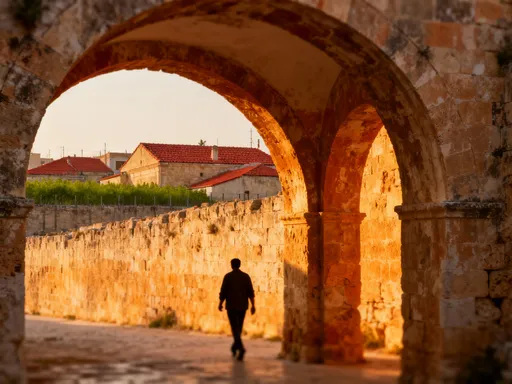
Encircling the old city, the 16th-century Venetian Walls are more than a historical monument—they are the skeleton upon which modern Nicosia is built. Constructed by the Republic of Venice in anticipation of Ottoman invasion, these fortifications were designed as a state-of-the-art defense system. Their star-shaped bastions, engineered to deflect cannon fire, reflect Renaissance military innovation. Today, they no longer serve a defensive purpose, but their presence continues to shape the city’s identity and daily life.
Stretching approximately 4.8 kilometers and punctuated by 11 bastions, the walls form a continuous green belt that invites leisure and contemplation. The dry moat has been transformed into a public park, where families picnic under cypress trees, joggers trace the perimeter, and students gather beneath shaded walkways. This adaptive reuse demonstrates how heritage can be both preserved and made relevant. Rather than being sealed off as a relic, the walls are integrated into the rhythm of urban life, proving that historical structures can serve contemporary needs.
Restoration efforts, led by the Nicosia Master Plan—a bi-communal initiative involving both Greek and Turkish Cypriot architects—have ensured the walls’ survival. Using traditional materials and techniques, experts have stabilized crumbling sections while maintaining authenticity. Signage in multiple languages explains the history of each bastion, turning the circuit into an open-air museum. For children and adults alike, walking the full loop becomes an educational journey through time, where the physicality of the walls makes history tangible.
The walls also influence modern development. Zoning regulations restrict building heights near the fortifications, preserving sightlines and preventing visual clutter. This policy protects the city’s skyline and reinforces the centrality of heritage in urban planning. As a result, new constructions must respond to the scale and character of the old, fostering architectural dialogue rather than disruption. For visitors, this means the city center retains its charm without succumbing to generic modernization.
Perhaps most importantly, the Venetian Walls symbolize endurance. They have witnessed sieges, occupations, and division, yet they remain. Their continued presence offers a quiet message of resilience—a reminder that even in times of conflict, certain things endure. For families walking hand in hand along the ramparts, the walls are not just stone and earth; they are guardians of memory, offering a sense of continuity in an ever-changing world.
Ottoman-Era Neighborhoods: Courtyards, Kiosks, and Quiet Charm
Within the embrace of the Venetian Walls lies Laiki Gitonia, a preserved Ottoman-era neighborhood that embodies the soul of old Nicosia. Stepping into its narrow lanes feels like entering a different era—one defined by craftsmanship, community, and quiet domesticity. Here, houses with overhanging wooden balconies, known as *şahnişin*, lean gently toward one another, their intricate latticework filtering sunlight into cool, shaded interiors. These homes were built not for show, but for living, designed to respond to the island’s hot climate and extended family structures.
The heart of these traditional Cypriot homes is the central courtyard. Enclosed by high stone walls, these open-air spaces serve as private oases, where families gather, children play, and laundry dries in the breeze. Thick masonry walls provide natural insulation, keeping interiors cool in summer and warm in winter. This passive design, refined over centuries, reflects a deep understanding of environmental harmony. For modern travelers interested in sustainable living, these homes offer timeless lessons in energy efficiency and comfort without reliance on artificial systems.
Laiki Gitonia has been carefully restored to maintain its authenticity while supporting local life. Unlike heavily touristed historic districts in other cities, it remains a lived-in neighborhood. Residents still occupy many of the houses, tending potted plants and greeting neighbors from their doorsteps. Small museums and craft workshops operate in others, offering demonstrations of traditional pottery, lace-making, and woodworking. This balance between preservation and daily use ensures that the area does not become a sterile museum piece but remains vibrant and evolving.
Visitors are welcomed with quiet respect. Guided walking tours, often led by local residents, share stories of family life, seasonal customs, and architectural details that might otherwise go unnoticed. These personal narratives deepen the experience, transforming a simple stroll into a meaningful encounter with culture. For mothers traveling with children, the neighborhood’s calm pace and shaded paths make it ideal for unhurried exploration. There are no souvenir stalls or loud advertisements—just the gentle hum of everyday life.
The preservation of Laiki Gitonia also reflects a broader commitment to cultural continuity. By protecting these homes, Nicosia honors the craftsmanship of past generations and ensures that future ones can learn from them. For families seeking destinations that value heritage without commercializing it, this neighborhood stands as a model of thoughtful conservation. Its charm lies not in grandeur, but in intimacy—the kind found in a courtyard fountain, a vine-covered wall, or the scent of jasmine in the evening air.
Religious Architecture: Coexistence in Stone and Dome
Nicosia’s skyline is marked by a quiet harmony of religious structures—churches, mosques, and monasteries standing in close proximity, often within sight of one another. This architectural proximity reflects a long, complex history of coexistence. Rather than erasing one another, successive communities have adapted existing buildings, creating a layered sacred landscape. The most iconic example is the Selimiye Mosque, originally constructed as the Gothic-style Cathedral of Saint Sophia in the 13th century. Under Ottoman rule, it was converted into a mosque, with minarets added to its twin bell towers and Christian iconography covered or repurposed.
This transformation was not merely symbolic—it was architectural diplomacy. The Ottomans preserved the cathedral’s structure while reinterpreting its function, demonstrating a pragmatic respect for existing craftsmanship. Today, visitors can still see the fusion of styles: pointed arches and ribbed vaults typical of French Gothic design coexist with Islamic calligraphy and mihrabs. The interior, though altered, retains its awe-inspiring verticality, inviting reflection regardless of faith. For families of all backgrounds, the mosque serves as a powerful example of how spaces can evolve without losing their essence.
Similarly, the Church of St. John the Almsgiver, located just a short walk away, showcases Byzantine craftsmanship with its domed roof and surviving frescoes. Though smaller in scale, it holds deep spiritual significance for the Orthodox community. Its preservation amidst centuries of change speaks to the resilience of cultural identity. Other religious sites, such as the Haydar Pasha Tekke, a Sufi lodge with a tranquil courtyard, further enrich the city’s spiritual tapestry. These places are not isolated—they are woven into the urban fabric, accessible and visible to all.
What makes Nicosia’s religious architecture particularly meaningful is its lack of grand confrontation. Unlike cities where religious buildings are positioned as statements of dominance, here they coexist with quiet dignity. A minaret rises beside a church spire, not in competition, but in conversation. This built-in pluralism offers a subtle yet powerful message: difference need not lead to division. For families seeking destinations that model tolerance and mutual respect, Nicosia’s sacred architecture provides a profound example.
Efforts to preserve these sites are ongoing, with both communities participating in restoration projects. International organizations have supported conservation work, emphasizing the universal value of these structures. The focus remains on authenticity—using traditional materials and techniques to maintain historical integrity. As a result, visitors experience these buildings not as relics, but as living spaces of worship and reflection. Their continued use ensures that history is not frozen, but flowing.
Modern Interventions: When New Meets Old
In many historic cities, modern architecture risks clashing with the past, imposing glass towers and steel forms that overshadow heritage. Nicosia takes a different approach—one of listening, not shouting. Contemporary projects in the city center are guided by principles of sensitivity, scale, and dialogue. The Nicosia Master Plan, a long-term urban strategy developed collaboratively by Greek and Turkish Cypriot planners, sets strict guidelines for new construction: buildings must respect height limits, use compatible materials, and respond to the existing street pattern.
One of the most successful examples of this philosophy is the adaptive reuse of former industrial buildings. A disused warehouse near the Pedieos River has been transformed into a cultural center, with its original brick façade preserved and new glass extensions added in a way that complements rather than competes. Inside, flexible spaces host art exhibitions, community events, and educational programs. This kind of intervention shows how old structures can be given new life without losing their character—a model particularly relevant for families interested in sustainable urban development.
Another notable project is the use of glass infills in historic walls. In some restored sections of the city, transparent panels are inserted where original masonry was lost, allowing visitors to distinguish between old and new while maintaining structural integrity. This honest approach to restoration avoids imitation and celebrates the passage of time. It teaches an important lesson: preservation does not mean freezing a building in the past, but allowing it to tell its full story, scars and all.
Public spaces have also benefited from thoughtful modernization. The renovation of Eleftheria Square, a central plaza near the walls, involved removing vehicular traffic and introducing greenery, seating, and pedestrian pathways. The redesign, led by architect Zaha Hadid in collaboration with local experts, respects the site’s historical layers while making it functional for contemporary use. Today, it is a popular gathering place for families, musicians, and tourists, proving that modern design can enhance heritage rather than detract from it.
These interventions reflect a broader cultural attitude: progress does not require erasure. By integrating new elements with care, Nicosia demonstrates that cities can evolve without losing their soul. For travelers who value authenticity, this balance is refreshing. It suggests that urban development can be both forward-looking and deeply respectful of the past—a lesson with global relevance.
Everyday Architecture: Shops, Cafés, and Street Life
Beyond its monuments and museums, Nicosia’s true character unfolds in its everyday buildings—small-scale structures that support community life. The city is dotted with old-school barbershops with vintage chairs, family-run grocery stores with wooden counters, and kafeneia where men sip coffee and play backgammon. These vernacular spaces, often overlooked in architectural discourse, are essential to the city’s identity. They are not designed for tourists, but for living, and their persistence speaks to a culture that values continuity over change.
Many of these shops occupy ground floors of historic buildings, their façades retaining original features like arched doorways and hand-painted signs. Inside, marble counters, brass fixtures, and glass display cases create an atmosphere of timeless service. Some have operated for generations, with sons taking over from fathers, preserving not just businesses, but traditions. For visitors, stepping into one of these shops feels like entering a living archive—one where the past is not displayed, but practiced.
Street kiosks, another hallmark of Nicosia’s urban fabric, serve everything from newspapers to homemade pastries. Often painted in bright colors and tucked into narrow alleys, they function as informal community hubs. Regulars stop by daily, exchanging news and greetings. These small structures contribute to the city’s human scale, making it feel intimate and familiar. For families walking together, these encounters with local life are often the most memorable parts of a trip.
Preserving these everyday spaces is as important as protecting grand landmarks. When a neighborhood loses its corner bakery or neighborhood café, it loses a piece of its social fabric. In Nicosia, there is growing awareness of this risk. Local initiatives support small businesses through grants and visibility campaigns, recognizing that economic vitality and cultural preservation are intertwined. For travelers who care about authentic experiences, these efforts ensure that the city remains real, not staged.
The charm of Nicosia’s street life lies in its ordinariness. There are no chain stores or flashy billboards dominating the view. Instead, the city grows organically, shaped by the needs and rhythms of its people. This authenticity resonates deeply with families seeking destinations that feel genuine and welcoming. In a world of homogenized urban landscapes, Nicosia’s everyday architecture stands as a quiet act of resistance—a reminder that the most meaningful places are not designed, but lived.
Why Nicosia’s Architecture Deserves Global Attention
In an era when cities around the world are becoming increasingly similar—filled with glass towers, chain stores, and standardized designs—Nicosia offers a powerful alternative. Its architecture is not about spectacle, but about continuity. It tells a story of adaptation, resilience, and quiet coexistence. Rather than erasing the past, the city builds upon it, layer by layer, creating an urban environment that feels both historic and alive. This layered authenticity is rare, and it deserves recognition on the global stage.
What makes Nicosia truly exceptional is its ability to balance preservation with progress. The city does not treat heritage as a museum exhibit, but as a living foundation for modern life. From the Venetian Walls turned green belt to the Ottoman courtyards still used by families, history is not behind glass—it is underfoot, in the walls, in the daily routines of its people. This integration of past and present offers a model for cities everywhere, showing that development does not require demolition.
Moreover, Nicosia’s architectural landscape reflects a deeper cultural achievement: the possibility of shared identity despite political division. The common materials, scales, and forms found on both sides of the Green Line speak to a heritage that transcends conflict. In a world often defined by polarization, this built continuity offers a hopeful message—that even in division, common ground can persist.
For travelers, especially families seeking meaningful destinations, Nicosia provides more than scenic views. It offers a chance to experience a city that values slowness, authenticity, and human connection. Its streets invite exploration not through grand gestures, but through quiet details—a painted door, a courtyard fountain, a shaded bench. These moments accumulate into a profound sense of place.
Urban planners and architects can also learn from Nicosia’s approach. The success of the Nicosia Master Plan demonstrates that collaborative, community-centered design can produce lasting results. By prioritizing scale, material honesty, and adaptive reuse, the city shows how innovation can serve heritage rather than supplant it. These principles are not limited to Cyprus—they are universally applicable.
Ultimately, Nicosia’s architecture is a testament to the quiet power of continuity. It reminds us that cities are not just collections of buildings, but living records of human experience. In its stones, arches, and courtyards, we see resilience, adaptation, and the enduring value of home. For anyone who believes that the past can guide the future with grace, Nicosia is not just worth visiting—it is worth understanding, celebrating, and learning from.