Lost in the Wind: Punta Arenas’ Viewpoints That Stole My Breath
Have you ever stood at the edge of the world and felt the wind speak to you? Punta Arenas, perched on the southern tip of Chile, isn’t just a destination—it’s a raw, untamed whisper of Patagonia. Wandering here means chasing horizons where the earth meets sky in silence so deep it echoes. I came for the views, but stayed for the soul-stirring stillness only these wild viewpoints could offer. This is not a place of manicured trails or crowded lookouts. Instead, it offers something rarer: vast, unfiltered moments where landscape and solitude merge into something close to grace.
The Edge of the World: First Glimpse of Punta Arenas
Punta Arenas sits at the southernmost tip of mainland South America, a resilient city carved out of wind and willpower. It is the largest urban center in Chilean Patagonia and serves as the primary gateway to some of the continent’s most remote and breathtaking natural wonders. Located on the Brunswick Peninsula, it overlooks the Strait of Magellan—a vital waterway connecting the Atlantic and Pacific Oceans. For centuries, this strait guided explorers, traders, and dreamers, and today, it still pulses with quiet historical significance.
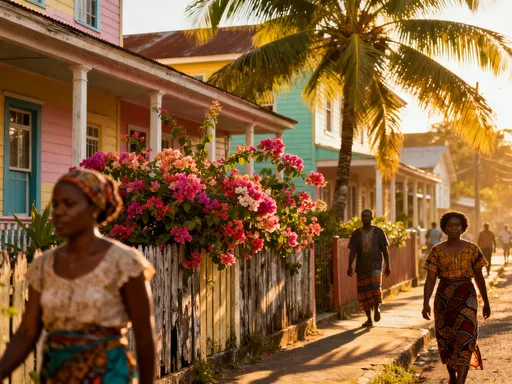
Upon arrival, visitors are often struck not by grand monuments, but by the city’s quiet endurance. The streets are lined with colorful wooden houses, their facades weathered by decades of strong southern winds. These homes cling to the hillsides like stubborn thoughts refusing to be erased. The sky here feels larger, the air crisper, and the sense of isolation is palpable—yet comforting. Unlike many destinations that announce their beauty with fanfare, Punta Arenas reveals itself slowly, through subtle shifts in light and shadow, through the way the wind carries distant gull cries across open spaces.
What makes this city unique is not just its geography, but its spirit. It does not feel like an endpoint, despite its position near the literal edge of the continent. Instead, it feels like a threshold—an invitation to step beyond the familiar. Travelers passing through on their way to Torres del Paine National Park or Ushuaia often underestimate Punta Arenas, treating it as a mere stopover. But those who linger discover a place where stillness speaks louder than noise, where the landscape teaches patience, and where every viewpoint becomes a quiet conversation between self and sky.
Mirador Cerro de la Cruz: Where the City Unfolds
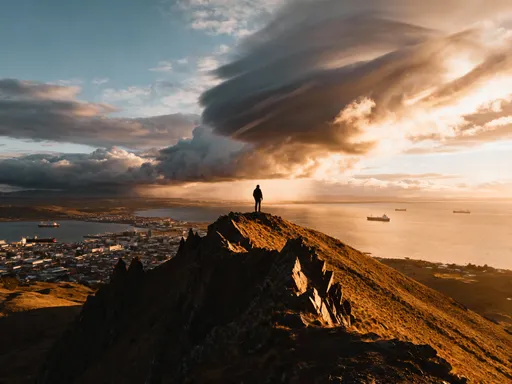
One of the most iconic experiences in Punta Arenas is the ascent to Mirador Cerro de la Cruz, a hilltop viewpoint that offers a sweeping panorama of the city and the strait beyond. The trail begins just off Manuel Bulnes Avenue, winding upward through a mix of paved paths and natural terrain. Though the climb is modest—roughly 20 to 30 minutes for most adults—it rewards with one of the most complete visual introductions to the region. As you rise, the city gradually unfolds beneath you, layer by layer, like a map coming into focus.
At the summit, the view stretches in all directions. To the north and east, Punta Arenas fans out in a patchwork of rooftops, parks, and winding streets, framed by distant hills. To the west, the Strait of Magellan shimmers under shifting light, its waters reflecting the ever-changing mood of the sky. On clear days, the outline of Tierra del Fuego is visible across the water, a ghostly silhouette in the distance. The air at the top is almost always in motion, carrying with it the scent of salt and damp earth, a reminder that this is a land shaped by wind and water.
A simple metal cross stands at the peak—not an elaborate monument, but a quiet landmark that has become symbolic of arrival. It was originally erected in memory of early settlers, but today it serves more as a marker of perspective. Visitors often pause here, not to pray, but to absorb the scale of what lies before them. Whether you arrive at sunrise, when the city glows in soft gold, or at sunset, when the strait burns with orange and purple hues, the emotional impact is the same: a deep sense of being present in a place that feels both vast and intimate.
Weather plays a crucial role in the experience. Cloud cover can obscure the view entirely, yet even then, there is beauty in the mist, in the way the city fades into abstraction. Conversely, a sudden break in the clouds can feel like a revelation, as if the landscape has chosen to reveal itself just for you. For those seeking a reliable vantage point with minimal effort, Cerro de la Cruz delivers both accessibility and awe, making it a must-visit for first-time travelers.
The Strait’s Embrace: Water-Level Perspectives
While elevated viewpoints offer sweeping panoramas, the true rhythm of Punta Arenas is best felt at ground level, along the Costanera del Estrecho—the waterfront promenade that traces the edge of the Strait of Magellan. Here, the experience shifts from observation to immersion. Instead of looking down on the city, you walk within it, shoulder to shoulder with locals who come here to stroll, jog, or simply stand and watch the water.
The promenade stretches for several kilometers, offering uninterrupted views of the strait and its passing vessels. Fishing boats, cargo ships, and the occasional cruise liner glide through the gray-blue waters, each leaving a temporary scar on the surface before the wind smooths it away. Seagulls wheel overhead, their cries blending with the distant hum of engines and the soft crunch of gravel underfoot. Benches line the path, inviting quiet reflection, while interpretive signs provide insights into the region’s natural and cultural history—information about Magellanic penguins, the migration of southern right whales, and the indigenous Kawésqar people who once navigated these waters in canoes.
What makes this stretch of coastline so powerful is its ordinariness. There are no dramatic cliffs or exotic flora, just an honest, unembellished connection to the sea. Parents push strollers, couples walk hand in hand, and dogs dart after thrown sticks, all under the same wide sky. It is in these everyday moments that the city’s character becomes clear: resilient, grounded, and deeply tied to its maritime surroundings.
For visitors, the waterfront offers a different kind of viewpoint—one not defined by elevation, but by presence. Standing at the railing, feeling the wind press against your coat, watching a lone sailboat vanish into the haze, you begin to understand that beauty does not always require grandeur. Sometimes, it is found in the quiet continuity of tides, in the way life persists despite the cold and the wind, in the simple act of showing up and looking out.
Outskirts of Silence: Driving Toward the Unknown
Beyond the city limits, the landscape of southern Patagonia reveals its more untamed self. A short drive from Punta Arenas along Route 9 leads toward Puerto del Hambre, historically known as Port Famine—a site of early European settlement attempts that ended in tragedy. Today, the name carries weight, but the journey is not about mourning the past. It is about encountering a land that resists taming, where beauty and harshness coexist in perfect balance.
The road unfolds across open plains, where grass bends in unison with the wind and distant mountains rise like ancient sentinels. There are no guardrails, few signs, and only occasional pull-offs—places where drivers stop simply because the view demands it. These informal lookouts offer unfiltered access to Patagonia’s raw essence: endless skies, scattered herds of sheep, and the occasional guanaco standing motionless against the horizon. The trees here are few and twisted, shaped by decades of relentless wind into surreal, sculptural forms.
What makes this route so compelling is its sense of discovery. Unlike tourist-heavy destinations with marked trails and visitor centers, these viewpoints are uncurated. You won’t find trash bins or information boards—just the land, as it has always been. Stopping to step out of the car, you are met with a silence so complete it feels almost sacred. The only sounds are the wind, the distant bleat of a lamb, and the crunch of your boots on gravel.
History lingers in the air, not as a ghost, but as a quiet awareness. The remnants of old stone buildings near Puerto del Hambre speak of human ambition and fragility, yet they do not dominate the landscape. Instead, nature has reclaimed what was lost, weaving grass and lichen over fallen walls. This is not a place to seek answers, but to ask questions: What does it mean to belong to such a place? How do we measure progress against endurance? The land does not reply, but in its stillness, there is a kind of wisdom.
Cerro Pelado: A Local’s Ascent
For travelers seeking a more authentic, less trodden path, Cerro Pelado offers a rewarding alternative to the more popular Cerro de la Cruz. Located on the southern edge of the city, this hill is favored by locals who come here to hike, reflect, or simply escape the noise of daily life. The trailhead is less formal, accessed via a dirt path near residential neighborhoods, and the climb is steeper, requiring more effort—but the payoff is worth it.
The path is rocky and uneven, with no handrails or paved sections. Hikers must navigate loose stones and occasional patches of mud, especially after rain. But this lack of infrastructure is part of its appeal. There is no pretense here, no attempt to make nature convenient. Each step feels earned, and the journey itself becomes a form of meditation. As you ascend, the city gradually recedes behind you, replaced by an ever-widening horizon.
At the summit, the view is nothing short of spectacular. Unlike Cerro de la Cruz, which focuses primarily on the city and strait, Cerro Pelado offers a 360-degree panorama that includes not only Punta Arenas but also the distant peaks of the Andes, their snow-capped ridges glinting under the sun. To the south, the open plains stretch toward Antarctica, a reminder of just how far south you are. On clear days, the curvature of the Earth seems almost visible, the horizon bending slightly under the vast dome of the sky.
What sets this viewpoint apart is its solitude. You may encounter a local walking a dog, or a shepherd tending to sheep, but crowds are rare. There are no vendors, no benches, no signs—just open space and wind. It is a place for quiet contemplation, for standing still and letting the landscape fill your senses. For travelers who value connection over convenience, Cerro Pelado offers a rare gift: the chance to experience Patagonia not as a spectator, but as a temporary participant in its enduring story.
Weather as a Viewpoint: Learning to See in the Wind
In Punta Arenas, the weather is not an obstacle to viewing—it is the viewpoint itself. Nowhere else does climate shape the experience so profoundly. A single day can bring sunshine, rain, hail, and wind, sometimes within the span of an hour. Tourists accustomed to predictable conditions may find this frustrating, but those who adapt discover that the shifting skies reveal a deeper kind of beauty.
Low clouds rolling in from the strait can transform a familiar landscape into something dreamlike, softening edges and muting colors until the world feels hushed. A sudden break in the clouds, known locally as a “sunbreak,” can flood the hills with golden light, making the grass glow and the water sparkle as if lit from within. And the wind—always the wind—does not merely blow; it sculpts. It bends trees, ripples grass, and carries the scent of distant snow, reminding you that you are in a place governed by natural forces far greater than human design.
There is a lesson in this unpredictability. It teaches patience. It demands presence. You cannot rush a view in Punta Arenas; you must wait for it, sometimes for hours. You may stand at a lookout in the rain, shivering, seeing nothing but fog, only to have the clouds lift moments later, revealing a vista so stunning it takes your breath away. These moments do not happen on schedule. They happen when the land decides.
Travelers who embrace this rhythm often find their perception shifting. They stop chasing perfect photos and begin noticing subtler details—the way light filters through a storm cloud, the sound of wind in dry grass, the sudden appearance of a rainbow over the strait. In learning to see in the wind, they learn to see more deeply, not just with their eyes, but with their entire being.
Wandering with Purpose: Why Viewpoints Shape the Journey
Viewpoints in Punta Arenas are more than scenic stops—they are emotional waypoints. Each one marks a moment of pause, a break in the rhythm of travel where the mind can catch up with the body. In a world that often values speed and efficiency, these high places invite slowness, reflection, and presence. They are not just about what you see, but about what you feel when you stand at the edge of the Americas, with nothing but wind and sky between you and the unknown.
Standing at Cerro de la Cruz, walking the Costanera, or climbing Cerro Pelado, you begin to understand that perspective is not just visual—it is emotional, even spiritual. The vastness of the landscape shrinks personal worries, putting them into a broader context. The silence clears mental clutter. The wind, so often seen as an annoyance, becomes a companion, stripping away pretense and leaving only what is real.
Punta Arenas is a city that rewards those who wander with purpose. It does not dazzle with neon or noise. It does not cater to every comfort. But for those willing to embrace its rawness, its isolation, its ever-changing skies, it offers something rare: a chance to reconnect with the elemental. In a world of constant stimulation, such moments of stillness are not just valuable—they are necessary.
So the next time you plan a journey, consider not just where you will go, but how you will see. Seek out places where the view is not packaged, but earned. Where the wind speaks, and the land listens. Where standing still feels like the most important thing you can do. Punta Arenas does not give up its secrets easily—but for those who take the time to look, to feel, to wait, it offers a perspective that lasts long after the journey ends.