Where Art Meets Alpine Magic in Austria’s Hidden Corner
Nestled in the heart of Austria, Salzkammergut is more than just lakes and mountains—it’s a living canvas. I didn’t expect to find such a deep connection between nature and art until I wandered through its quiet villages and stumbled upon galleries tucked between forests and shores. This region doesn’t just inspire creativity—it breathes it. From historic theaters to contemporary studios, culture here feels organic, intimate, and unforgettable. The air carries the scent of pine and fresh paint, while the stillness of the lakes mirrors not only alpine peaks but also centuries of artistic reflection. UNESCO has recognized this harmony, honoring the region for its cultural and natural significance. For travelers seeking beauty that goes beyond postcard views, Salzkammergut offers a journey where art and landscape are inseparable companions.
The Soul of Salzkammergut: A Region Painted by Nature and History
Stretching across the federal states of Upper Austria, Salzburg, and Styria, the Salzkammergut region spans over 600 square kilometers of pristine lakes, dense woodlands, and snow-dusted mountains. Its name, derived from the historic salt mining industry—"Salz" meaning salt and "Kammergut" referring to imperial property—reveals a legacy of economic and cultural importance dating back to the Bronze Age. Salt was once called "white gold," and the wealth it generated helped fund grand architecture, patronage of the arts, and the development of refined local traditions. This fusion of natural bounty and human ingenuity laid the foundation for a region where creativity was not an indulgence but a way of life.
The dramatic scenery of Salzkammergut has long been a muse for artists, composers, and writers. The interplay of light on mirror-like lakes such as Hallstätter See and Wolfgangsee creates shifting palettes of blue, silver, and emerald, changing with the seasons and the hour of day. Forested slopes rise sharply from the water's edge, and baroque churches with onion-domed spires punctuate village skylines, their reflections trembling in the calm waters. These visual rhythms have shaped a regional aesthetic that values harmony, balance, and reverence for nature. The landscape does not merely surround the villages—it converses with them, influencing everything from house colors to craft patterns.
UNESCO inscribed the town of Hallstatt-Dachstein/Salzkammergut on its World Heritage list in 1997, recognizing both its archaeological significance and its enduring cultural landscape. This designation is not merely honorary; it reinforces a collective responsibility to preserve the region’s integrity. Local building codes maintain traditional architectural styles, ensuring that new structures echo the past in form and material. Wooden balconies overflow with geraniums, slate roofs slope gently, and painted shutters mirror the hues of surrounding nature. This continuity allows visitors to step into a world where time moves differently, and beauty is not staged but lived.
What makes Salzkammergut unique among alpine destinations is the seamless integration of art into everyday life. Unlike cities where culture is confined to museums and concert halls, here it spills into streets, workshops, and family kitchens. The rhythm of the seasons dictates not only farming and fishing but also festivals, craft production, and artistic retreats. In spring, woodcarvers sharpen their tools; in summer, plein air painters dot the lakeshores; in autumn, weavers prepare new textile collections; in winter, choirs rehearse in candlelit chapels. This cyclical creativity reflects a deep-rooted belief that art is not separate from living—it is living itself.
Hallstatt’s Quiet Genius: Art in the Most Photographed Village
Hallstatt, perhaps the most iconic village in Austria, draws tens of thousands of visitors each year, many arriving on day trips from Salzburg or Vienna. Its postcard-perfect setting—houses stacked like drawers along a narrow lakeshore strip, backed by the sheer face of the Dachstein Massif—makes it a magnet for photographers and dreamers alike. Yet beyond the Instagrammable facades lies a quieter, more enduring form of artistry rooted in craftsmanship and heritage. Here, tourism and tradition coexist, not always easily, but with a mutual respect that preserves the village’s soul.
One of the oldest crafts in Hallstatt is salt carving, a practice that dates back over 7,000 years. The Hallstatt Salt Mine, the oldest in the world, is not only a historical site but also a living workshop where artisans shape salt into delicate sculptures—roses, angels, and intricate geometric forms. These are not gimmicks for tourists; they are expressions of a deep connection to the earth. Visitors can try their hand at carving under the guidance of local experts, feeling the cool, crystalline texture of the mineral that once powered an empire. The salt mine also hosts seasonal exhibitions, including sound installations that echo through the underground tunnels, transforming the ancient chambers into immersive art spaces.
Woodcraft is another pillar of Hallstatt’s artistic identity. Generations of carpenters and carvers have built and decorated homes, boats, and religious figures using timber from the surrounding forests. Today, small ateliers tucked into alleyways continue this tradition, producing hand-carved figurines, ornate furniture, and musical instruments. One such workshop, run by a fourth-generation woodcarver, specializes in creating replicas of prehistoric tools discovered in the area, blending archaeology with art. These pieces are displayed in local heritage centers, where storytelling and craftsmanship merge to educate and inspire.
Textile arts also thrive in Hallstatt, particularly in the form of traditional embroidery. Women in the region have long adorned aprons, blouses, and table linens with intricate patterns using red, black, and white thread. Each motif carries meaning—some represent protection, others fertility or prosperity. Local artisans now teach these techniques in short workshops, allowing visitors to stitch their own keepsakes while learning about the symbolism behind each design. These intimate experiences offer a counterbalance to mass tourism, creating moments of connection that transcend the transactional.
What makes Hallstatt’s cultural offerings so powerful is their integration into daily life. A gallery might occupy the upper floor of a family-run bakery; a heritage display could be tucked beside a boat rental stand. There are no grand institutions demanding entry fees—just small, heartfelt spaces where art is shared, not sold. This humility makes the experience more authentic, reminding visitors that culture here is not performed for an audience but lived with intention.
Gosau’s Hidden Studios: Where Artists Escape to Create
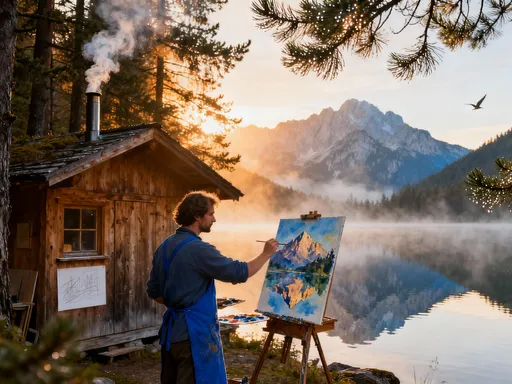
Just a short drive from Hallstatt, the alpine valley of Gosau offers a stark contrast—quieter, less visited, and deeply introspective. Nestled beneath the northern face of the Dachstein Glacier, Gosau has long been a sanctuary for artists seeking solitude and inspiration. The village itself is modest, with a few guesthouses, a historic church, and trails that lead into high meadows and pine forests. But scattered throughout the valley are private studios—some visible, others hidden behind trees—where painters, sculptors, and ceramicists work in near-seclusion.
The landscape here is raw and elemental. Snow lingers on the peaks well into June, and the Gosau Lake, framed by evergreens, reflects the sky with a stillness that feels almost sacred. Artists speak of this place as a source of clarity, where the absence of noise allows the inner voice to emerge. One painter, who has spent three decades splitting her time between Vienna and Gosau, described the valley as "a place where color finds you." She works primarily in oils, capturing the shifting light on the glacier and the subtle gradients of moss and stone. Her studio, a converted barn with large north-facing windows, is open to visitors during the annual Gosau Art Days, a weekend in late summer when creators welcome the public into their creative sanctuaries.
These open studio events are among the most authentic cultural experiences in the Salzkammergut. Unlike formal gallery openings, they are informal, uncurated, and deeply personal. Visitors might find a sculptor shaping limestone beside a wood-fired kiln, or a textile artist demonstrating natural dyeing techniques using alpine herbs. Conversations unfold naturally, often over homemade tea or apple cake offered by the artist’s family. There is no pressure to buy—only the invitation to witness, listen, and connect. For many travelers, this is the heart of what they seek: not souvenirs, but stories.
Several artists in Gosau emphasize sustainability and local materials. A ceramicist uses clay sourced from the Gosau River, tempering it with crushed quartz from nearby slopes. Her glazes are derived from minerals found in the region, resulting in earthy tones that echo the landscape. She avoids industrial processes, preferring wood-firing techniques that take days and require constant attention. The imperfections in her work—the slight warping, the unpredictable ash deposits—are celebrated as marks of authenticity. "Each piece tells the story of this place," she says, "and of the hands that shaped it."
Gosau’s artistic community is small but influential. Its members often collaborate with schools, museums, and cultural festivals across Austria, bringing the valley’s quiet energy to broader audiences. Yet they remain committed to preserving Gosau’s introspective character, resisting over-commercialization. For those willing to venture off the main tourist routes, Gosau offers a rare glimpse into the creative process—an alpine retreat where art is not a product, but a practice.
Bad Ischl: The Imperial Stage of Cultural Life
If Gosau represents the contemplative side of Salzkammergut’s artistry, Bad Ischl embodies its grandeur. Once the summer residence of Emperor Franz Joseph I and his wife, Empress Elisabeth (Sisi), this spa town became a cultural epicenter in the 19th century. The Kaiservilla, where the imperial couple spent three months each year, remains a symbol of this golden era. Today, it functions as both a museum and a cultural venue, hosting concerts, lectures, and exhibitions that bridge historical legacy with contemporary expression.
The town’s musical heritage is particularly strong. Anton Bruckner, one of Austria’s most revered composers, spent summers in Bad Ischl and composed several symphonies here. In his honor, the town hosts the annual Bruckner Festival, a two-week event each September that draws classical music lovers from across Europe. Performances take place in historic settings—the Kurhaus concert hall, the Catholic Parish Church, and even the gardens of the Kaiservilla—where acoustics blend with atmosphere to create transcendent experiences. Local musicians, many trained in Vienna or Linz, perform alongside international guest artists, ensuring a high standard of artistry.
But Bad Ischl is not trapped in the past. The festival increasingly commissions new works inspired by Bruckner’s legacy, encouraging modern composers to reinterpret his themes. One recent performance featured a string quartet composed by a young Austrian woman, blending Bruckner’s harmonic language with minimalist motifs. The result was both reverent and innovative, a dialogue across centuries. Such initiatives reflect a broader trend in the town: honoring tradition without being bound by it.
Other cultural events enrich Bad Ischl throughout the year. The Summer of the Arts program brings theater, dance, and visual art to public spaces, transforming parks and plazas into open-air galleries. Local schools participate, with children staging puppet shows and creating murals based on regional folklore. These inclusive efforts ensure that culture is not an elite pursuit but a community endeavor. The town also supports emerging artists through residency programs, offering studio space and accommodation in exchange for public workshops or exhibitions.
Walking through Bad Ischl, one feels the weight of history but also the pulse of the present. Biedermeier architecture lines the main street, where cafés serve sachertorte beneath chestnut trees. Yet alongside the historic façades are modern art boutiques, design studios, and a growing number of young entrepreneurs who blend tradition with innovation. A recent addition is a concept store that sells handcrafted jewelry inspired by imperial motifs but made with recycled metals. This fusion of old and new defines Bad Ischl’s cultural identity—a place where heritage is not preserved under glass but reimagined with care.
Attersee’s Creative Resurgence: From Klimt’s Time to Today
Lake Attersee, the largest in the Salzkammergut, has long been a haven for artists, but its most famous resident was Gustav Klimt. Between 1898 and 1916, the painter spent nearly every summer in the village of Kammer, where his family rented a house. Captivated by the lake’s changing light and the orderly beauty of the surrounding orchards, Klimt produced over 50 paintings during his stays, including landscapes and intimate portraits of local women. His work from this period is marked by flattened perspectives, rhythmic patterns, and a luminous palette—hallmarks of his mature style.
Today, Attersee continues to attract painters, photographers, and writers drawn to the same qualities that inspired Klimt. The Attersee Museum in Seewalchen am Attersee dedicates a permanent exhibition to his time in the region, displaying reproductions, personal letters, and historical photographs. While the originals are housed in major museums abroad, the museum succeeds in conveying the intimate atmosphere of Klimt’s summers—the long walks, the boat rides, the quiet afternoons spent sketching by the water. Temporary exhibitions feature contemporary artists who respond to Klimt’s legacy, creating a living dialogue between past and present.
Independent galleries have also flourished around the lake. In the village of Attersee, a small cooperative gallery showcases regional modernists working in expressionist and abstract traditions. Their paintings often depict the lake’s moods—stormy grays, tranquil blues, golden sunsets—through bold brushwork and emotional depth. Another gallery in Unterach specializes in plein air photography, exhibiting large-format images that capture the interplay of light and water at different times of day. These spaces are modest in size but rich in vision, often run by the artists themselves.
The influence of Klimt extends beyond visual art. Local designers have created textiles, ceramics, and stationery featuring motifs from his Attersee-period works, such as the repetitive patterns of apple blossoms or the geometric rhythms of rowboats. These items are sold in boutique shops and cultural centers, offering visitors a tangible connection to the region’s artistic heritage. Importantly, these reproductions are licensed and ethically produced, ensuring that Klimt’s legacy is honored with integrity.
What distinguishes Attersee’s art scene is its balance between reverence and innovation. Artists do not merely imitate Klimt; they use his presence as a springboard for their own explorations. A recent group exhibition titled "After Klimt" featured works that reinterpreted his themes through eco-art, digital media, and mixed materials. One piece used recycled lake plastic to create a shimmering surface reminiscent of his gold paintings, commenting on environmental change. This willingness to evolve while remembering the past ensures that Attersee remains a dynamic cultural destination.
Off-the-Beaten-Path Cultural Experiences You Won’t Find in Guidebooks
Beyond the well-known towns, the Salzkammergut is dotted with intimate cultural experiences that escape the crowds. In St. Wolfgang, the weekly artisan market in summer offers more than souvenirs—it’s a gathering of local makers. Woodturners demonstrate how they shape bowls from fallen timber; beekeepers share honey infused with alpine herbs; potters fire small batches in portable kilns. These artisans often welcome visitors into their homes for longer workshops, where the exchange feels more like hospitality than commerce.
Traunkirchen, on the shores of Lake Traunsee, is emerging as a center for ceramic arts. A collective of five artists runs a shared studio and teaching space, offering weekend courses in hand-building and glazing. Their work combines traditional Alpine forms with contemporary design, resulting in pieces that feel both timeless and modern. The studio hosts an annual open house, where visitors can watch artists at work, try their hand at the wheel, and enjoy live music in the garden.
Near Lake Fuschl, a sculpture trail winds through a forested hillside, featuring stone and metal works by regional artists. Unlike formal parks, this trail is unmarked and unadvertised, discovered mostly by word of mouth. The pieces are integrated into the landscape—some half-buried in moss, others perched on rock ledges—inviting quiet contemplation. There are no plaques or maps, only a sense of discovery. This intentional obscurity protects the experience from overtourism while preserving its meditative quality.
For travelers, the key to accessing these hidden gems is slowing down. Renting a bicycle, staying for multiple nights, and speaking with local hosts can unlock invitations to private viewings, studio visits, or family meals where stories are shared. These moments, fleeting and unscripted, often become the most memorable parts of a journey. They remind us that culture is not something to be consumed, but something to be lived.
How to Travel Salzkammergut Like a Culture Seeker: Practical Tips for an Art-Focused Journey
To truly experience the cultural depth of Salzkammergut, timing is essential. The best months for art-focused travel are May through October, when outdoor light is generous, and most studios, festivals, and markets are active. June and September are particularly ideal—fewer crowds, mild weather, and a full calendar of events, including the Bruckner Festival and Gosau Art Days.
Transportation within the region is efficient and scenic. The Austrian Federal Railways (ÖBB) connect major towns like Bad Ischl and Attnang-Puchheim, from which regional buses serve smaller villages. The Salzkammergut Card, available to overnight guests, provides free access to buses, ferries, and many museums, making cultural exploration both affordable and convenient. For greater flexibility, renting a bicycle or e-bike allows travelers to follow quiet roads and lakeside paths at their own pace.
Accommodation plays a crucial role in cultural immersion. Family-run guesthouses, known as "Pensionen," offer personal hospitality and local insight. Many hosts are artists, former teachers, or historians who gladly share stories, recommend hidden spots, or even arrange private visits to studios. Staying in one place for several nights—rather than hopping between destinations—allows for deeper connections and a more reflective pace.
When visiting galleries or workshops, it is respectful to ask before photographing artworks, especially in private studios. Purchasing directly from artists supports the local economy and ensures authenticity. Small gestures—writing a thank-you note, returning a borrowed tool, or simply listening—can leave a lasting impression. Travelers are encouraged to approach their journey not as observers but as guests, mindful of the delicate balance between tourism and tradition.
Finally, embracing silence is part of the cultural experience. In a world of constant noise, Salzkammergut offers spaces where one can simply be—by a lake, in a forest, in front of a painting. It is in these quiet moments that the region’s true artistry reveals itself: not in grand gestures, but in the careful stitch, the patient brushstroke, the enduring song.
Salzkammergut isn’t just a destination—it’s an invitation to slow down and see beauty through the eyes of those who live it every day. Its cultural venues, often hidden in plain sight, reveal a deeper truth: art here isn’t performed or displayed for show. It’s woven into the rhythm of life, sustained by history, nature, and quiet passion. To visit is not merely to observe, but to feel part of something timeless.